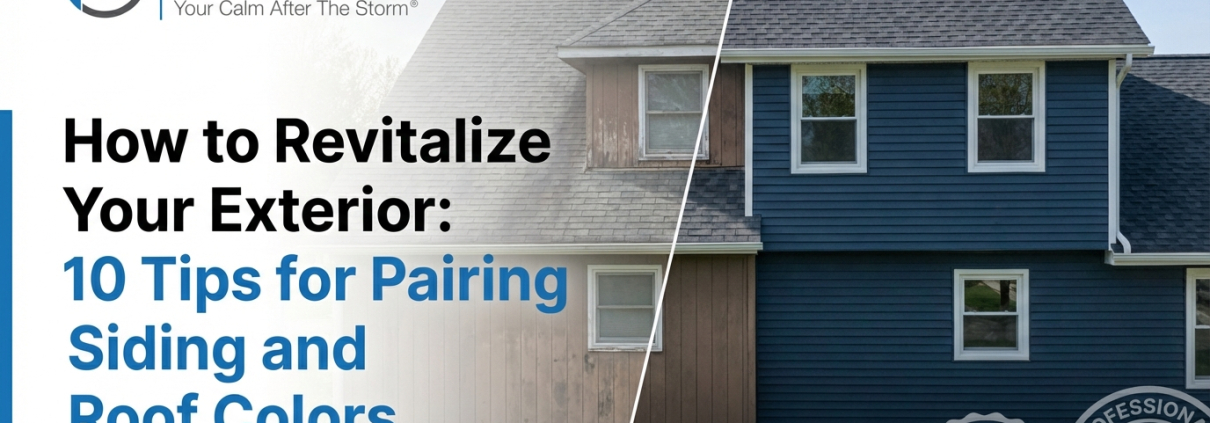
Master the art of pairing siding and roof colors with our expert guide. Learn about color theory, architectural styles, and energy efficiency for your home.

Master the art of pairing siding and roof colors with our expert guide. Learn about color theory, architectural styles, and energy efficiency for your home.
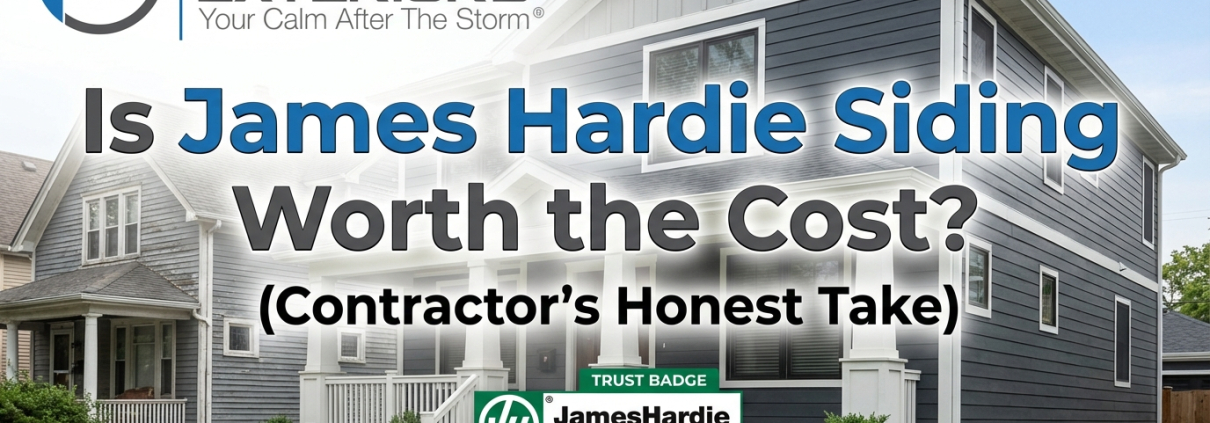
If you are a homeowner in Chicago or the surrounding Illinois suburbs, you have likely heard the name James Hardie mentioned in every conversation about exterior remodeling. It is the titan of the industry, often touted as the ‘gold standard’ for siding. However, when you receive your first official quote, the initial reaction is usually a bit of sticker shock. As contractors with over 25 years of experience at Revived Exteriors, we hear the same question every week: Is James Hardie siding actually worth the premium cost?
Many homeowners ask the same question before signing a contract: is James Hardie siding worth it compared to vinyl or engineered wood?
The short answer is yes, but the long answer involves understanding that you aren’t just paying for a brand name; you are paying for a complete shift in material science, longevity, and home protection. In this deep dive, we are pulling back the curtain on the contractor side of things—the labor difficulties, the material risks, and the long-term ROI—to help you decide if fiber cement is the right investment for your property.
Featured Snippet Answer: Is James Hardie Siding Worth It? A Contractor’s Honest Verdict?
So, is James Hardie siding worth it when you compare it to vinyl or natural cedar? The answer comes down to how long you plan to stay in your home, how much maintenance you’re willing to deal with, and whether you value long-term durability over the lowest upfront price.
The cost comparison below shows how James Hardie fiber cement stacks up against vinyl siding and natural cedar siding in terms of material cost, installation difficulty, and total installed price.
| Siding Type | Material Cost | Installation Difficulty | Typical Installed Cost |
|---|---|---|---|
| Standard Vinyl Siding | $6.00 – $7.00 per sq ft | Low | $8.50 – $11.00 per sq ft |
| James Hardie Fiber Cement | $8.50 – $11.00 per sq ft | High | $11.50 – $18.00 per sq ft |
| Natural Cedar Siding | $12.00 – $15.00 per sq ft | Medium | $15.00 – $25.00 per sq ft |
This comparison helps homeowners decide whether James Hardie siding is worth the higher upfront cost compared to vinyl or cedar siding, especially in Illinois climates where freeze-thaw cycles, wind, and moisture exposure matter.
From a contractor’s perspective, vinyl siding makes sense for homeowners prioritizing the lowest initial investment. Cedar offers a premium natural look but comes with higher maintenance and long-term u
Yes, James Hardie siding is worth the cost for homeowners seeking a 30+ year siding solution with high ROI, superior fire resistance, and minimal maintenance. While the upfront installation price is typically 40-50% higher than vinyl, its long-term durability, impact resistance, and insurance benefits significantly outperform cheaper alternatives.
From a contractor’s perspective, the “worth” of a product isn’t just about how it looks on day one; it’s about how many callbacks we get five or ten years down the road. James Hardie fiber cement is composed of a specialized mix of Portland cement, sand, and cellulose fibers. This combination creates a board that is dimensionally stable, meaning it doesn’t expand and contract like vinyl or rot like wood. For a homeowner, this translates to a product that stays beautiful and functional for decades.
If you plan on living in your home for less than five years, the premium cost of James Hardie might not be fully realized in your tenure. However, if this is your “forever home,” Hardie is almost always the better choice. It offers a level of permanence that other materials simply cannot match. When we install Hardie, we are installing peace of mind. You won’t have to worry about melting siding during a backyard barbecue or panels blowing off during a Chicago windstorm.
One major reason contractors recommend Hardie is its aesthetic versatility. Unlike vinyl, which often has a plastic-like sheen, James Hardie boards have a deep, embossed wood grain that mimics cedar perfectly. It provides the heavy, architectural shadow lines that high-end homes require. For homeowners looking to maintain the historical integrity of an Illinois suburb home while upgrading to modern materials, the visual appeal alone often justifies the price tag.
To understand the cost, you have to look at the two main components: materials and labor. James Hardie is significantly more expensive to manufacture than vinyl. The raw ingredients—cement and sand—are heavier and more costly to process than the PVC used in vinyl siding. Additionally, the proprietary ColorPlus® Technology, which involves multiple coats of baked-on finish, adds to the material expense but saves you from the immediate need for painting.
| Siding Type | Material Cost | Installation Difficulty | Typical Installed Cost |
|---|---|---|---|
| Standard Vinyl Siding | $6.00 – $7.00 per sq ft | Low | $8.50 – $11.00 per sq ft |
| James Hardie Fiber Cement | $8.50 – $11.00 per sq ft | High | $11.50 – $18.00 per sq ft |
| Natural Cedar Siding | $12.00 – $15.00 per sq ft | Medium | $15.00 – $25.00 per sq ft |
It’s not just the planks themselves. A proper James Hardie installation requires specialized trim (HardieTrim®), specific fasteners, and high-grade sealants. Many contractors also recommend using HardieWrap® weather barriers to ensure the 30-year warranty remains valid. When you see a James Hardie quote, remember that it often includes a more robust underlying system than a standard vinyl job, which contributes to the higher price but also the superior protection.
One of the biggest contributors to the cost of James Hardie siding is the labor. Unlike vinyl, which can be cut with a simple pair of snips and hung relatively quickly by a small crew, James Hardie requires a highly skilled, specialized team. The physical demands of the material are significant; fiber cement is heavy, weighing roughly 2.3 pounds per square foot. This means a single 12-foot board can weigh over 20 pounds, requiring two people to handle it safely and prevent breakage.
A critical factor that many homeowners don’t realize is the impact of OSHA regulations regarding crystalline silica dust. When fiber cement is cut, it releases dust that can be hazardous if inhaled. To comply with safety standards, contractors must use specialized PCD (polycrystalline diamond) tipped blades and HEPA-filtered vacuum systems attached to their saws. These tools are expensive and the setup time is longer, which naturally drives up the labor cost for the project.
In some cases, especially with older homes common in the Chicago area, a contractor must evaluate whether the existing wall structure can support the added weight of fiber cement. While most modern homes are built to handle it, older homes might require minor reinforcements or specific fastening patterns to ensure the siding doesn’t pull away from the studs over time. This expertise and careful evaluation are part of the “premium” you pay for when hiring a qualified James Hardie installer.
James Hardie often uses the term “hardie-zone” to describe how they engineer their products for specific climates. In Illinois, we are in HZ5, meaning the boards are specifically formulated to resist the freeze-thaw cycles and heavy snow of our Midwestern winters. But the durability goes much further than just weather resistance. Fiber cement is virtually immune to the things that destroy other siding types.
James Hardie siding is non-combustible and carries a Class A fire rating. This is a massive selling point in densely populated Chicago neighborhoods. If a fire starts in a neighbor’s house or a nearby grill gets too hot, James Hardie will not melt or act as fuel for the fire. Vinyl, conversely, can melt from the heat of a nearby fire within seconds, exposing your home’s flammable wood sheathing. Many insurance companies offer discounts for homes with fiber cement siding due to this safety feature.
According to independent testing and manufacturer data, fiber cement siding is classified as non-combustible and provides superior fire resistance compared to vinyl.
James Hardie fiber cement siding performance standards
Have you ever dealt with woodpeckers or termites? If you have wood or engineered wood siding, these can be a nightmare. James Hardie is literally made of rock and sand; pests have no interest in it. It won’t be pecked through by birds or eaten by carpenter ants. This level of protection saves homeowners thousands of dollars in potential repairs and pest control treatments over the life of the siding.
The most common competitor to James Hardie is LP SmartSide, which is an engineered wood product. From a contractor’s perspective, both have pros and cons. LP SmartSide is lighter and less fragile, making it easier to transport and install. However, when we talk about total material integrity, Hardie still holds the edge in certain categories. Because LP is wood-based, it still technically has the potential for moisture absorption if the edges aren’t sealed perfectly.
One “hidden” reality contractors deal with is that James Hardie is brittle until it is fastened to the wall. It can crack or snap if carried flat rather than on its edge. This means homeowners must ensure their contractor has a sophisticated supply chain and handling process. At Revived Exteriors, we take extra care during the unloading process because a single hairline fracture in a board can compromise the installation if it’s not caught and discarded.
While LP SmartSide is treated with zinc borate to resist rot, James Hardie’s fundamental composition is inorganic. This makes it naturally more resistant to the humid summers and wet springs of the Illinois climate. If you want a material that will never rot, regardless of the treatment, fiber cement is the objective winner. However, LP is often chosen by homeowners who want the look of Hardie but have a slightly stricter budget, as the labor for LP is generally lower.
James Hardie offers a stellar 30-year non-prorated limited warranty. However—and this is a big however—that warranty is contingent on strict adherence to the James Hardie Installation Best Practices manual. This manual is over 100 pages long, and many general contractors who aren’t specialists frequently make errors that legally void the warranty. This is where the true cost of a “cheap” contractor comes into play.
Hardie requires specific clearances from various surfaces. For example, there must be a 6-inch clearance between the siding and the grade (ground) and a 1/4-inch to 2-inch clearance from roof lines. If a contractor installs the siding touching the shingles or directly on the grass, moisture will wick into the board, and James Hardie will not honor the warranty when the board begins to delaminate. These “minor” mistakes are the most common reason for siding failure.
When using ColorPlus® Technology boards, contractors must use the James Hardie touch-up kits for cut edges and nail heads. A common mistake is using the touch-up paint over large areas or for “fixing” a scratch that is too large. Because the factory finish is baked on and the touch-up paint is air-dried, they will age and fade at different rates. If applied improperly, your house can end up looking “patchy” within 3-5 years. A specialist knows exactly where and how to use these kits to maintain the aesthetic integrity.
When analyzing whether James Hardie is worth the cost, you must look at the Return on Investment (ROI). According to Remodeling Magazine’s annual ‘Cost vs. Value’ report, fiber cement siding consistently ranks as one of the top home improvement projects for recouping costs. On average, homeowners can expect to recoup 69% to 80% of the project cost in added home value immediately upon completion.
In competitive real estate markets like Naperville, Arlington Heights, or Chicago’s North Shore, “James Hardie Siding” is a powerful phrase in a listing description. It signals to potential buyers that the previous owner did not cut corners. It creates an immediate sense of luxury and durability that can lead to faster sales and higher closing prices. For many buyers, seeing Hardie means they won’t have to worry about siding for the next 30 years, which is a massive incentive.
While wood siding requires repainting every 3-5 years and vinyl may need professional cleaning or replacement after a hail storm, James Hardie with ColorPlus® Technology only requires occasional washing with a garden hose. The paint is warrantied for 15 years against peeling and cracking. If you calculate the cost of three professional paint jobs over 15 years for a wood-sided home, the James Hardie premium often pays for itself in maintenance savings alone.
At Revived Exteriors, we want our clients to make the best decision for their specific situation. James Hardie is an incredible product, but it isn’t the right choice for every single homeowner. To help you decide, we have put together a quick checklist based on our 25 years in the field. Ultimately, the decision comes down to your budget, your timeline, and your goals for your property.
Regardless of which material you choose, the quality of the installation will dictate the outcome. James Hardie is a complex product that requires specialized tools and deep technical knowledge. Choosing a James Hardie Elite Preferred Contractor is the only way to guarantee that the 100+ page installation manual is followed to the letter, protecting your 30-year warranty and ensuring your investment truly lasts as long as it should. For long-term homeowners, the answer to is James Hardie siding worth it comes down to durability, safety, and lifetime value—not just upfront price.
Superior craftsmanship, quality products, and a stress-free customer experience delivered at fair market prices by a family-owned team with over 25 years of experience.
Yes—for many homeowners, James Hardie siding is worth it because it delivers long-term durability, strong curb appeal, fire resistance, and lower lifetime maintenance compared to vinyl or wood. The value is highest when installed correctly and when you plan to stay in the home long-term.
James Hardie typically costs more than vinyl because the material is heavier, the installation is more labor-intensive, and the trim/details take longer. In many real-world quotes, Hardie can land around 40–50% higher than vinyl depending on home complexity and the scope of trim and accessories.
Fiber cement siding is consistently one of the top exterior projects for ROI. Many homeowners see strong resale appeal because “James Hardie” signals a premium, durable exterior and reduces the buyer’s concern about future maintenance and replacement.
With proper installation and moisture management, James Hardie siding can perform for 30+ years in Illinois freeze-thaw climates. The biggest factor isn’t the board—it’s whether flashing, clearances, and cut-edge sealing were done correctly.
Hardie is non-combustible, resistant to pests and woodpeckers, and dimensionally stable. Unlike vinyl, it won’t warp or melt, and unlike wood, it won’t rot when installed correctly.
Common issues include improper clearance to grade or rooflines, missing kickout flashing, incorrect fasteners, unsealed cut edges, and poor moisture management. The warranty depends on following manufacturer installation requirements.
For many long-term homeowners, yes. James Hardie often wins on durability, fire resistance, and long-term curb appeal, even though the upfront price is higher than vinyl.
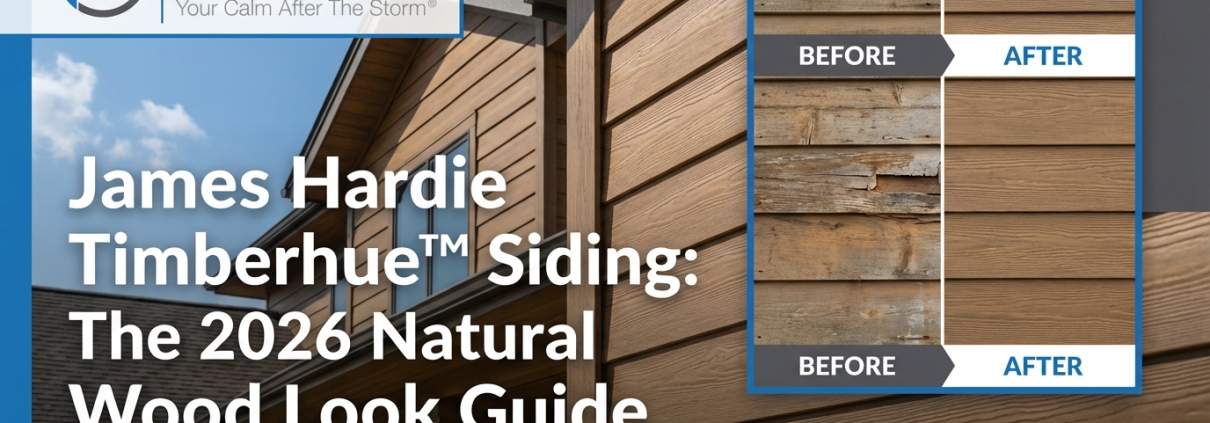
James Hardie Timberhue siding is designed for homeowners who want the warmth of real wood without the long-term maintenance, fire risk, or moisture concerns of traditional timber. For decades, homeowners have faced a difficult choice: the timeless, warm aesthetic of natural wood or the rugged durability of fiber cement. In 2026, James Hardie officially closes that gap with the nationwide launch of the Timberhue™ Collection. This next-generation siding line offers a multi-tonal, two-tone finish that mimics the depth and character of real wood while maintaining the fire-rated, pest-resistant properties that have made James Hardie the industry leader in exterior protection.
What is James Hardie Timberhue™ siding? Timberhue™ is a premium fiber cement siding collection launching in Spring 2026, specifically engineered to replicate the appearance of natural wood through advanced two-tone ColorPlus® Technology. Available exclusively in 5-inch and 7-inch reveals, it provides homeowners with a low-maintenance, non-combustible alternative to cedar and oak without sacrificing the “stained wood” aesthetic.
At Revived Exteriors, we understand that Chicago homeowners need products that can withstand brutal Illinois winters and humid summers. The Timberhue™ collection is designed to meet these challenges head-on. In this comprehensive guide, we will break down the technology, the color palette, the costs, and why this product is set to dominate the residential remodeling market in 2026.
The 2026 launch of Timberhue™ represents more than just a new color palette; it is a fundamental shift in how fiber cement is manufactured. Historically, fiber cement siding was available in solid colors or simple wood-grain textures. While these looked excellent from the curb, they often lacked the organic variation found in real timber. Timberhue™ solves this by utilizing a proprietary application process that layers multiple pigments to create highlights and shadows within the grain.
This collection is strategically focused on the “lap siding” market, launching exclusively in 5-inch and 7-inch reveals. This focus allows for a more controlled manufacturing process, ensuring that the two-tone finish remains consistent across every board. By narrowing the profile options, James Hardie has optimized the visual impact of the grain, making it indistinguishable from stained cedar at a distance of only five feet.
For those who have followed the evolution of the Hardie® Plank, Timberhue™ is the natural successor to the Magnolia Home collection. It takes the “farmhouse” aesthetic and elevates it into a more sophisticated, luxury realm. It is specifically designed for the homeowner who wants their house to stand out in a neighborhood of solid-colored vinyl or traditional painted siding, offering a high-end, organic feel that was previously only achievable with high-maintenance wood products.
Natural wood siding, such as Western Red Cedar, is undeniably beautiful, but it comes with a “maintenance tax.” In regions like the Midwest, wood expands and contracts with the seasons, leading to cracked paint, peeling stains, and eventually, rot. Homeowners are increasingly turning to Timberhue™ because it offers the “stain look” without the 3-to-5-year re-staining cycle required by real timber.
Beyond aesthetics, the move toward Timberhue™ is driven by safety. Real wood is combustible. In an era where fire safety is becoming a priority for insurance companies and building codes, the non-combustible nature of fiber cement is a massive advantage. Timberhue™ does not ignite when exposed to a direct flame, providing a critical layer of protection for your family and your investment.
Pest resistance is another major factor. Wood-peckers, termites, and carpenter bees are naturally attracted to real wood siding. These pests can cause thousands of dollars in damage before they are even noticed. Because Timberhue™ is composed of cement, sand, and cellulose fibers, it offers no nutritional value to pests. It is a “set it and forget it” solution that maintains its integrity for decades.
The Timberhue™ palette for 2026 has been curated to reflect modern architectural trends while remaining grounded in classic wood tones. The collection features eight primary colors, each utilizing a two-tone finish to create depth. Among the most anticipated colors are ‘Hickory’ and ‘Weathered Oak’, which offer a warm, medium-brown tone that perfectly replicates the look of freshly stained white oak.
For those seeking a more modern or Scandinavian aesthetic, ‘Ash’ and ‘White Birch’ provide lighter, cooler tones. These colors are particularly effective for contemporary homes with black window frames. At the other end of the spectrum, ‘Ebony Forest’ offers a deep, charred-wood look reminiscent of the Japanese Shou Sugi Ban technique. This color is expected to be a top-seller in the Pacific Northwest and modern urban developments.
The full list of 2026 Timberhue™ colors includes:
One of the most significant advantages of James Hardie products is their HardieZone® System. In the Chicagoland area, we fall into the HZ5® zone. This means Timberhue™ siding installed by Revived Exteriors is specifically engineered to resist freezing temperatures, snow, ice, and the dramatic temperature swings common in the Midwest. The material is formulated to maintain dimensional stability, meaning it won’t shrink or swell like wood or vinyl.
Timberhue™ also carries an ASTM E136 non-combustibility rating. This is a critical distinction from engineered wood products like LP SmartSide, which are still essentially wood-based. Fiber cement will not fuel a fire. This performance spec not only provides peace of mind but can also lead to lower homeowner insurance premiums in many jurisdictions, as the home is considered significantly more fire-resistant.
Additionally, the ColorPlus® Technology used in the Timberhue™ finish is baked onto the boards in a controlled factory environment. This ensures maximum UV resistance. Standard field-applied stains on real wood fade quickly under the sun’s harsh rays. Timberhue™ is designed to resist fading, chipping, and cracking, backed by a 15-year limited finish warranty that covers both paint and labor.
According to independent fire-resistance testing and manufacturer specifications, fiber cement siding products like James Hardie are classified as non-combustible and do not ignite when exposed to flame.
Learn more about James Hardie fiber cement siding performance standards
In the world of wood-look siding, the primary competition for Timberhue™ is LP SmartSide ExpertFinish. Both products aim to solve the “maintenance problem” of real wood, but they take very different approaches. LP SmartSide is an engineered wood product made of wood strands treated with zinc borate and resins. While it is durable and easy to install, it remains a combustible material.
Material
Fiber Cement (Sand, Cement, Cellulose)
Engineered Wood (Strands & Resin)
Fire Rating
Non-Combustible (ASTM E136)
Combustible
Finish Tech
Multi-tonal ColorPlus® (Two-tone)
Proprietary ExpertFinish (Single or Multi)
Moisture
Won’t rot, swell, or buckle
Resistant, but edges must be sealed
Timberhue™’s main advantage in 2026 is the realism of its two-tone finish. While LP has made strides with its textured finishes, Hardie’s multi-tonal application mimics the way stain soaks into different densities of wood grain. Furthermore, for homeowners in high-density urban areas or wildfire-prone zones, the non-combustibility of Timberhue™ makes it the clear winner for safety and long-term resale value.
Budgeting for a siding project requires looking at both the material cost and the labor cost. Because Timberhue™ is a premium, specialized product within the James Hardie lineup, it carries a higher price tag than standard HardiePlank® Lap Siding. On average, you can expect the material cost for Timberhue™ to be approximately 15% to 25% higher than the standard ColorPlus® statement collection.
For a standard 2,000-square-foot home in the Illinois market, estimated 2026 pricing for a full Timberhue™ installation ranges from $14.00 to $19.00 per square foot, including labor, materials, and disposal of old siding. This varies based on the complexity of your home’s architecture, the number of stories, and the choice of trim. In comparison, real cedar siding often costs $20-$25 per square foot once you factor in the initial staining and subsequent maintenance costs over the first 10 years.
The ROI (Return on Investment) for Timberhue™ is exceptionally high. According to the “Cost vs. Value” report, fiber cement siding replacement consistently ranks as one of the top home improvement projects for recouping costs at resale. By choosing the Timberhue™ look, you are adding “designer curb appeal” that can significantly increase the valuation of your home compared to standard vinyl or fiber cement options.
To make Timberhue™ look like real wood, the installation process must be handled with care. The most common mistake made by inexperienced contractors is “stair-stepping” the grain patterns. Because the two-tone finish is applied in a factory, there are a finite number of grain patterns. A skilled installer, like the team at Revived Exteriors, will shuffle the boards from different pallets to ensure that identical grain patterns do not end up adjacent to one another.
Achieving a truly “random” look requires planning. We recommend a “random staggered joint” pattern, where the vertical seams between boards are spaced at least 32 inches apart. This prevents the eye from catching a repetitive mechanical pattern, which is the quickest way to reveal that a product is not real wood. Furthermore, the use of color-matched caulking and touch-up kits specifically designed for the Timberhue™ palette is essential for a seamless finish.
Proper flashing and clearance are also vital. While fiber cement is moisture-resistant, it should never be installed in direct contact with the ground or roofing materials. Maintaining a 1-inch to 2-inch clearance from horizontal surfaces ensures that water can drain properly, preventing long-term damage to the wall assembly. Following the James Hardie Best Practices (HZ5®) manual is non-negotiable for maintaining the 30-year product warranty.
One of the biggest selling points of Timberhue™ is how little you have to do to keep it looking new. Unlike real wood, which needs to be sanded and re-sealed, Timberhue™ only requires basic cleaning. We recommend a low-pressure wash with a garden hose and a soft-bristle brush once a year to remove dust, pollen, and environmental debris. This simple step prevents the buildup of mold or mildew on the surface of the paint.
Avoid the use of high-pressure power washers, as these can damage the specialized two-tone coating. If you encounter stubborn stains, a mild detergent mixed with water is usually sufficient. Because the color is baked-in, you won’t experience the typical “chalking” associated with cheap vinyl siding. The pigments used in the 2026 collection are specifically designed to withstand the high UV exposure of south-facing walls without significant color shift.
If your siding is damaged—for example, by a stray lawnmower rock—it is important to use the James Hardie touch-up kit specifically matched to your Timberhue™ color. Because these colors are multi-tonal, the touch-up kit often includes a base coat and a top-glaze to replicate the two-tone effect. This attention to detail ensures that any repairs remain invisible to the naked eye, preserving your home’s curb appeal for the full life of the product.
If you are a homeowner who loves the warmth of wood but hates the maintenance, Timberhue™ is the definitive answer. The 2026 collection solves the primary aesthetic complaint about fiber cement—that it can look “flat” or “plastic.” With its multi-tonal pigments and deep 5-inch and 7-inch reveals, it is the most realistic wood-alternative on the market today.
While the initial investment is higher than standard siding options, the long-term value is undeniable. You save thousands of dollars in re-staining costs, benefit from lower insurance risks due to non-combustibility, and enjoy a home that looks architecturally superior to anything else on the block. For those in the Chicago suburbs looking to maximize their home’s value and durability, Timberhue™ by James Hardie is a premier choice.
At Revived Exteriors, we have spent 25 years helping homeowners navigate the complexities of exterior remodeling. We are proud to be one of the first installers ready to bring the Timberhue™ revolution to Illinois. Whether you are repairing storm damage or embarking on a complete exterior transformation, this collection offers the perfect blend of beauty and brawn. For homeowners prioritizing durability, curb appeal, and long-term value, James Hardie Timberhue siding stands apart as the most advanced wood-look fiber cement option available in 2026.
Superior craftsmanship, quality products, and a stress-free customer experience delivered at fair market prices by a family-owned team with over 25 years of experience. Experience the Revived Exteriors difference today.
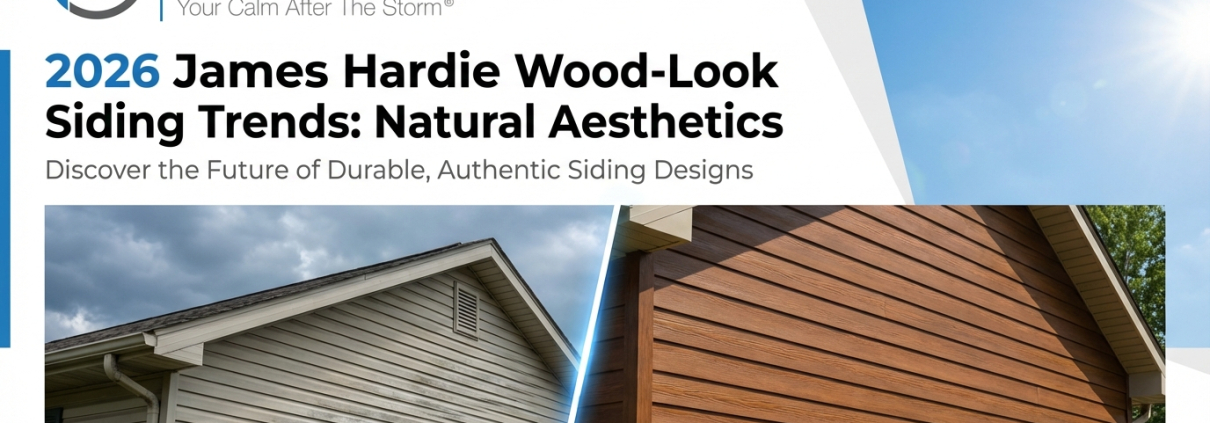
Homeowners in Chicago and its suburbs are increasingly seeking ways to blend natural aesthetics with durable, low-maintenance materials. In 2026, James Hardie’s wood-look siding is poised to be a leading choice for achieving this balance. This comprehensive guide explores the emerging trends in natural-looking siding, focusing on colors, textures, styles, and installation best practices. We’ll also delve into why James Hardie is the preferred material for homeowners seeking both beauty and longevity for their home exteriors. Ultimately, this article will prepare you to make informed decisions about your siding project.
As a family-owned team with over 25 years of experience, Revived Exteriors understands the unique needs of homeowners in the Chicago area. We’re committed to providing superior craftsmanship, quality products, and a stress-free customer experience. We’re excited to share our insights into the latest trends in James Hardie wood-look siding, helping you create the home exterior of your dreams.
This guide will cover the top trends including color palettes, horizontal and vertical styles, board and batten looks, and unique texture enhancements for a natural aesthetic that protects and beautifies your home’s exterior.
The desire for homes that feel connected to nature is stronger than ever. Homeowners are increasingly drawn to natural materials, earthy tones, and designs that evoke a sense of tranquility and harmony. This trend extends beyond interior design to the exterior of the home, where siding plays a crucial role in creating the desired aesthetic. Natural aesthetics are becoming increasingly popular in Chicago as homeowners aim to create welcoming and comforting spaces.
There are several reasons for this growing appeal. First, natural aesthetics offer a respite from the often-harsh realities of modern life. They provide a sense of calm and connection to the environment, which can be particularly valuable in urban and suburban settings. Second, natural materials and designs tend to be timeless and classic, ensuring that your home will remain stylish for years to come. This makes them a sound investment for homeowners seeking long-term value.
Finally, natural aesthetics often align with sustainable and eco-friendly building practices. Many homeowners are looking for ways to reduce their environmental impact, and choosing natural or natural-looking materials is one way to achieve this goal. As a result, siding options that mimic the look of wood, stone, and other natural elements are becoming increasingly popular.
When it comes to achieving a natural wood look with exceptional durability and low maintenance, James Hardie siding stands out as the premier choice. Made from fiber cement, James Hardie siding offers the beauty of wood without the drawbacks of traditional wood siding, such as susceptibility to rot, pests, and fire. This is especially important in the Chicago area, where harsh weather conditions can take a toll on home exteriors.
James Hardie siding is also incredibly versatile, offering a wide range of styles, textures, and colors to suit any architectural design. Whether you’re looking for a traditional clapboard look, a rustic shingle style, or a modern board-and-batten design, James Hardie has an option that will meet your needs. Plus, with its ColorPlus Technology, James Hardie siding resists fading, chipping, and cracking, ensuring that your home’s exterior will look beautiful for years to come.
Revived Exteriors has extensive experience installing James Hardie siding in the Chicago area. We understand the nuances of working with this material and can ensure that your siding is installed correctly and efficiently. We’re committed to providing our customers with the highest quality products and workmanship, and we believe that James Hardie siding is the best choice for homeowners seeking a beautiful, durable, and low-maintenance exterior.
In 2026, color trends for wood-look siding are leaning towards warm, earthy tones that complement the natural environment. While classic neutrals like grays and whites remain popular, we’re seeing a surge in demand for more vibrant and nature-inspired hues. These colors help create a welcoming and inviting home exterior that blends seamlessly with the surrounding landscape.
Here are some of the top color trends to watch for:
When choosing a color for your wood-look siding, it’s important to consider the architectural style of your home, the surrounding landscape, and your personal preferences. Revived Exteriors can help you select the perfect color to complement your home and create the desired aesthetic.
The orientation of your siding can have a significant impact on the overall look and feel of your home. Horizontal siding is the most traditional and widely used option, creating a sense of width and expansiveness. Vertical siding, on the other hand, offers a more modern and contemporary look, adding height and visual interest. The most important element is selecting siding that helps you achieve your aesthetic vision.
Here’s a closer look at the design considerations for each orientation:
In 2026, we’re seeing a growing trend of mixing horizontal and vertical siding to create a unique and visually appealing exterior. This approach allows homeowners to add depth and dimension to their homes while showcasing their personal style. Revived Exteriors can help you design a siding layout that incorporates both horizontal and vertical elements for a truly custom look.
Board and batten siding, characterized by wide vertical boards and narrow vertical battens, has been a popular choice for centuries. Its enduring appeal lies in its rustic charm, its ability to add visual interest, and its versatility in complementing various architectural styles. Today, board and batten siding is experiencing a resurgence in popularity, particularly in farmhouse-style and modern homes. It is particularly effective in Chicago suburbs that boast larger properties where this style can truly shine.
James Hardie offers a range of board and batten siding options that capture the classic look of wood without the maintenance concerns. Their fiber cement board and batten siding is resistant to rot, pests, and fire, ensuring that your home will look beautiful for years to come. Plus, with its ColorPlus Technology, James Hardie siding resists fading, chipping, and cracking, maintaining its vibrant color and pristine appearance.
When designing a board and batten siding layout, it’s important to consider the width of the boards and battens, the spacing between the battens, and the overall proportions of the home. Revived Exteriors can help you create a custom board and batten design that complements your home’s architectural style and enhances its curb appeal.
In 2026, homeowners are increasingly seeking ways to add depth and dimension to their siding through textural enhancements. This can be achieved through a variety of techniques, including choosing siding with a pronounced wood grain texture, incorporating decorative trim, and adding architectural details. These textural enhancements can elevate the look of your home and create a more visually appealing exterior.
James Hardie offers a range of siding products with realistic wood grain textures that mimic the look and feel of natural wood. Their siding is also available in a variety of profiles, including clapboard, shingle, and board and batten, allowing you to create a custom look that reflects your personal style.
In addition to choosing siding with a pronounced texture, you can also add depth and dimension through decorative trim. This can include window and door trim, corner boards, and frieze boards. These trim elements can be painted or stained to match or contrast with the siding, creating a unique and visually appealing effect.
While choosing the right siding materials and design is essential, proper installation is equally crucial for ensuring the longevity and performance of your siding. Professional installation ensures that your siding is installed correctly, preventing moisture damage, pest infestations, and other problems. A professional installation team also adheres to strict quality control measures.
Revived Exteriors has extensive experience installing James Hardie siding in the Chicago area. Our team of skilled installers is trained to follow James Hardie’s installation guidelines, ensuring that your siding is installed correctly and efficiently. We also offer a comprehensive warranty on our workmanship, giving you peace of mind knowing that your investment is protected.
When choosing a siding contractor, it’s important to look for a company with a proven track record of quality workmanship, excellent customer service, and a commitment to using the best materials and installation techniques. Revived Exteriors is proud to be a trusted siding contractor in the Chicago area, and we’re committed to providing our customers with the highest quality products and services.
Once your wood-look siding is installed, it’s important to maintain it properly to ensure its long-term beauty and performance. Fortunately, James Hardie siding is relatively low-maintenance, requiring only occasional cleaning to remove dirt and debris. However, there are a few simple steps you can take to keep your siding looking its best.
Here are some tips for maintaining your wood-look siding:
By following these simple maintenance tips, you can keep your wood-look siding looking beautiful for years to come. Revived Exteriors can also provide you with additional maintenance advice and services to help you protect your investment.
Investing in new siding is a significant decision, and understanding the cost considerations is crucial for making an informed choice. While James Hardie siding may have a higher upfront cost compared to some other siding options, its long-term value and durability make it a worthwhile investment. In fact, due to its durability, it may prove to be cheaper over time.
The cost of James Hardie wood-look siding can vary depending on several factors, including the style of siding, the size of your home, and the complexity of the installation. However, you can expect to pay more for James Hardie siding than for vinyl siding, but less than for natural wood siding. The return on investment comes from longevity and lower maintenance costs.
Revived Exteriors offers free, no-obligation estimates for James Hardie siding installation. We’ll assess your home’s needs and provide you with a detailed breakdown of the costs involved. We also offer financing options to help make your siding project more affordable.
Superior craftsmanship, quality products, and a stress-free customer experience delivered at fair market prices by a family-owned team with over 25 years of experience.
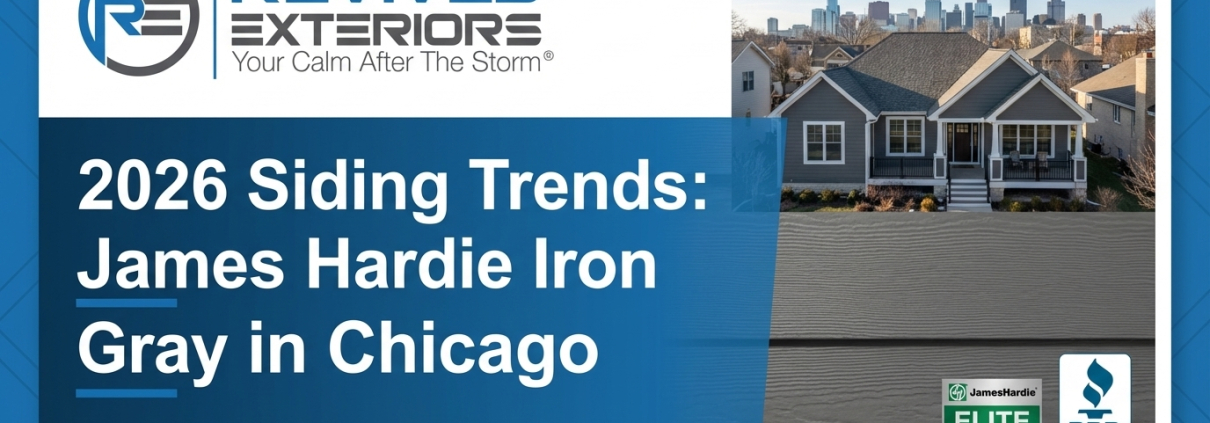
As we approach 2026, the Chicagoland residential landscape is undergoing a dramatic aesthetic shift. Gone are the days of safe beiges and nondescript tans. The standout leader for the upcoming year is undoubtedly James Hardie Iron Gray. This deep, sophisticated hue captures the mood of modern architecture while honoring the historic roots of classic Chicago housing styles. At Revived Exteriors, we are seeing a surge in homeowners choosing this bold neutral to fortify their homes against our harsh winters while maximizing curb appeal.
Whether you own a historic bungalow in Berwyn or a modern build in Naperville, Iron Gray offers a versatility that few other colors can match. This guide explores why Iron Gray is the definitive choice for Chicago exteriors in 2026, covering everything from design pairings to weather resilience.
James Hardie Iron Gray is the top exterior trend for 2026 in Chicago because it perfectly bridges the gap between modern “moody” aesthetics and traditional elegance. Unlike fleeting fads, this deep charcoal hue anchors a home visually, providing a stunning contrast against snow in winter and lush greenery in summer. When paired with James Hardie’s ColorPlus® Technology, it resists the fading and chipping common in Chicago’s freeze-thaw cycles, making it a high-ROI investment that satisfies both commercial durability needs and high-design residential standards.
Chicago architecture has always favored materials that convey strength and permanence, like brick and stone. James Hardie Iron Gray mimics this sense of solidity. It is not just a color; it is a statement. As the 2026 standard, it represents a departure from the “safe” choices of the past decade. Homeowners are increasingly looking for exteriors that feel custom and high-end.
Iron Gray serves as the perfect canvas. It is dark enough to be dramatic but neutral enough to avoid clashing with neighboring homes. In the context of Revived Exteriors’ service area—from the historic districts to the sprawling suburbs—this color unifies diverse architectural styles under a banner of sophisticated durability.
For years, the trend was “light and airy.” However, 2026 marks a definitive pivot toward “moody neutrals.” This shift is driven by a desire for homes that feel grounded and substantial. Darker siding absorbs light differently, creating rich shadows and highlighting the texture of the HardiePlank lap siding.
Dark colors like Iron Gray evoke a sense of protection and calm—qualities highly valued by homeowners facing the unpredictable Chicago climate. Furthermore, dark exteriors tend to make a property look more expensive and architecturally significant. In urban environments like Lincoln Park or Wicker Park, this aesthetic blends seamlessly with industrial-chic trends, while in suburbs like Arlington Heights, it provides a striking break from the sea of beige vinyl.
One of the unique advantages of Iron Gray is its ability to adapt to the specific vernacular of Chicago architecture. It is not a “one-style-fits-all” farmhouse color; it enhances the distinct character of our local housing stock.
For the classic Chicago Bungalow, Iron Gray is often used on dormers or additions to complement existing red or brown brick. It modernizes the home without erasing its history. On Georgian-style homes, swapping outdated aluminum siding for Iron Gray HardiePlank creates a stately, manor-like appearance that revitalizes the curb appeal instantly.
Chicago Two-Flats often feature heavy limestone accents. Iron Gray provides a lower-contrast look against limestone compared to white or cream, resulting in a seamless, monolithic appearance that emphasizes the building’s height and grandeur.
How you accessorize Iron Gray determines the final vibe of your home. In 2026, we are seeing two distinct design camps emerge among our clients.
This remains the most popular choice for modern farmhouses. It involves pairing Iron Gray main siding with Arctic White trim, soffits, and fascia. This crisp definition highlights rooflines and architectural details. It is clean, sharp, and pops vividly against the gray Chicago winter sky.
The more avant-garde trend for 2026 is the monochromatic palette. This involves matching the trim (or choosing a very close shade like Gray Slate) to the Iron Gray siding. Combined with black window frames and dark gutters, this creates a sleek, unified structure. This approach is particularly effective for contemporary homes or mid-century modern renovations.
A major concern with dark exterior colors is fading. Standard vinyl siding in dark gray often chalks or fades to a uneven lighter gray after just a few years of UV exposure. James Hardie’s ColorPlus® Technology solves this. The color is baked on in a factory environment, ensuring a consistent, durable finish that resists UV radiation.
Chicago roads are heavily salted, and that salt mist can travel. Unlike wood, which can deteriorate from salt exposure, or vinyl, which can become brittle and crack in sub-zero temperatures (especially when hit by hail or debris), James Hardie fiber cement is engineered for climate. It maintains its structural integrity through the rapid freeze-thaw cycles of a Midwest spring.
An often-overlooked benefit of darker siding like Iron Gray in a Northern climate is thermal gain. During our long winters, dark siding absorbs more solar heat than white siding. While this won’t replace your furnace, every bit of passive solar gain helps reduce the thermal load on your home during January and February.
Choosing the right gray can be difficult. Here is how the 2026 favorite compares to other top contenders.
| Feature | Iron Gray (2026 Trend) | Evening Blue (2025 Favorite) | Aged Pewter |
|---|---|---|---|
| Undertone | Pure, deep charcoal (neutral) | Deep navy/marine | Warm greige/taupe |
| Best Style Match | Modern, Craftsman, Bungalow | Cape Cod, Coastal | Traditional, Colonial |
| Visual Weight | Bold and anchoring | Cool and calming | Soft and blending |
| Chicago Fit | Excellent (urban & suburban) | Good (lakefront focus) | Good (historic suburbs) |
Looking ahead to Spring 2026, the industry is buzzing about the upcoming “TimberHue” aesthetic—advanced finishes that mimic the grain and warmth of natural cedar and walnut but with fiber cement durability. Iron Gray is the perfect partner for these wood-tone accents.
Imagine an Iron Gray exterior with a “TimberHue” cedar-look gable accent or front porch column. The cool charcoal tone of the siding intensifies the warmth of the wood look. This combination allows homeowners to enjoy the “mixed materials” look of custom architecture without the maintenance nightmare of real wood, which often rots or requires annual staining in Illinois humidity.
Siding replacement offers one of the highest returns on investment (ROI) for exterior remodeling. According to Remodeling Magazine’s Cost vs. Value Report, fiber cement siding replacement consistently outperforms vinyl in resale value.
In strict HOAs found in suburbs like Glenview or Naperville, Iron Gray is widely accepted because it is a “natural” earth tone, despite being bold. It fits within restrictive covenants while still allowing the home to stand out. For sellers, an Iron Gray exterior signals a modern, updated home, often justifying a higher asking price compared to homes with faded, dated siding.
James Hardie Iron Gray is more than just a color trend for 2026; it is a strategic choice for Chicago homeowners who value longevity, aesthetics, and performance. By choosing this deep, elegant shade, you are future-proofing your home against shifting trends and shifting weather patterns alike.
At Revived Exteriors, we understand that seeing is believing. We can help you visualize this color on your home using design tools and physical samples, ensuring it complements your roof, brick, and landscape perfectly.
Don’t let another Chicago winter damage your aging exterior. Schedule a free consultation with Revived Exteriors today to see how James Hardie Iron Gray can redefine your home’s curb appeal.
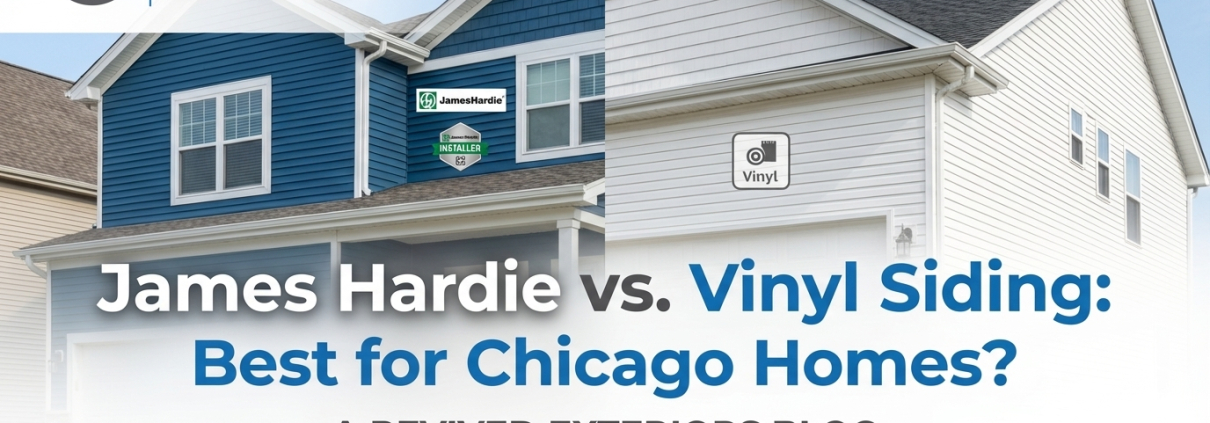
Living in Chicago means your home has to endure some of the most punishing weather extremes in the country. From the blistering humidity of July to the sub-zero wind chills of January, your siding is the first line of defense against the elements. If you are considering a siding replacement, you have likely narrowed your choices down to the two heavyweights: James Hardie Fiber Cement and Vinyl Siding.
At Revived Exteriors, we have installed miles of both across the Chicagoland area. We know that the "best" choice depends entirely on your budget, your neighborhood architecture, and your long-term goals for the property. This guide cuts through the marketing fluff to compare these materials specifically against the backdrop of Chicago’s unique climate and housing market.
For most Chicago homeowners, the choice comes down to this: Choose James Hardie if you prioritize curb appeal, ROI, fire resistance, and historic accuracy (essential for Bungalows and Greystones). It handles freeze-thaw cycles better but costs more upfront. Choose Vinyl Siding if you want a cost-effective, virtually maintenance-free solution that offers excellent insulation options without the need for periodic painting.
Before analyzing performance, it is crucial to understand what you are actually putting on your walls. These materials are fundamentally different in composition.
James Hardie siding is a composite material made of Portland cement, sand, water, and cellulose fibers. It is engineered to mimic the look and feel of natural wood but with significantly higher durability. It is heavy, rigid, and feels substantial to the touch.
Vinyl is made from Polyvinyl Chloride (PVC) resin. It is a plastic product that is extruded into panels. It is lightweight, flexible, and the color is baked through the entire material, meaning scratches are less visible.
Chicago’s weather is notorious for a reason. We experience temperature swings of over 100 degrees Fahrenheit throughout the year. Here is how each material holds up.
The freeze-thaw cycle is the silent killer of building materials in Illinois. Water seeps into cracks, freezes, expands, and shatters material.
Whether you are in a high-rise path or an open prairie suburb, wind load is a serious consideration.
Vinyl siding is installed using a "hanging" method to allow for thermal movement. However, this loose installation can lead to rattling noises during high winds—a common complaint in open areas. James Hardie is blind-nailed securely to the sheathing. It is rigid and heavy, meaning it stays silent and secure even during those 60 mph gusts off Lake Michigan.
Chicago summers are humid. Vinyl is naturally resistant to moisture and will not rot. However, if water gets behind the vinyl (common with poor installation), it can get trapped. Hardie board is resistant to rot and warping, but like wood, it requires proper flashing and installation to ensure moisture doesn’t affect the substrate.
Chicago isn’t just a city of siding; it’s a city of brick, stone, and historic architecture. The visual weight of your siding matters.
James Hardie offers a deep, authentic wood grain look (Select Cedarmill) that is often indistinguishable from real wood from the curb. This makes it the preferred choice for upscale renovations.
Vinyl has come a long way, but up close, the seams where panels overlap are visible (unless you opt for longer lengths), and the texture can sometimes appear artificial or "plastic-y" compared to fiber cement.
This is a critical, often overlooked point for Chicago residents. If you live in a designated Historic District or own a classic Chicago Bungalow in certain preservation zones, vinyl siding may be restricted or banned.
Local preservation commissions often favor James Hardie because it maintains the architectural integrity of historic homes. It mimics the lap siding used in the 1920s without the rot issues. Before you sign a contract for vinyl in a historic zone, check your local ordinances—or ask us to check for you.
The cost difference is usually the deciding factor for homeowners. However, you must look at the total cost of ownership.
| Factor | Vinyl Siding | James Hardie Siding |
|---|---|---|
| Initial Cost | $ (Low to Mid) | $$$ (Mid to High) |
| Maintenance | Wash annually (Low) | Repaint every 15-20 years (Mid) |
| Lifespan | 20-40 Years | 30-50+ Years |
Vinyl is significantly cheaper to install—typically 20% to 40% less than Hardie. However, Hardie holds its value longer.
According to the annual Remodeling Cost vs. Value Report for the East North Central region (which includes Chicago), fiber cement siding replacement consistently provides a higher Return on Investment (ROI) than vinyl. Buyers in the suburbs look for “Hardie Board” as a premium feature in listing descriptions.
There is a middle ground often ignored in this debate: Insulated Vinyl Siding. This isn’t the flimsy plastic skirting you see on sheds. This is high-grade vinyl fused to rigid foam insulation.
In Chicago, the construction season is short. This affects your installation timeline.
Vinyl is fast to install. A skilled crew can wrap a standard home in a few days. It is lightweight and easy to cut.
James Hardie requires specialized craftsmanship. It is heavy and requires special cutting tools to manage silica dust. The installation takes longer, which translates to higher labor costs. Furthermore, Hardie cannot be painted in freezing temperatures, so if you install pre-primed boards in December, you may have to wait until spring for the final paint job. Choosing ColorPlus® Technology (pre-finished boards) solves this winter installation bottleneck.
Do you live near O’Hare, Midway, or a CTA train line? The acoustic properties of your siding matter. James Hardie, being a dense cement product, offers superior noise dampening compared to standard hollow vinyl. If blocking out the roar of a jet engine or the rattle of the ‘L’ is a priority, fiber cement is the clear winner.
At Revived Exteriors, we believe an educated homeowner makes the best decisions. Whether you choose the premium durability of James Hardie or the cost-effective versatility of Vinyl, our team is ready to ensure the installation is flawless.
Ready to upgrade your home’s exterior?

Good quality siding lasts for years with very little maintenance. If your existing siding is damaged or worn, upgrades can improve the appearance of your home and help you save money. This home improvement project increases the value of your property, reduces heating and cooling costs and protects your home’s interior from pests. Find out why upgrading your siding is a wise decision, just ask your #1 siding contractor from Arlington Heights IL.
Improve Your Home’s Appearance With A New Siding Upgrade
Older homes may be finished with inexpensive wood siding. Without constant maintenance, often in the form of sealing or staining, lower quality wood siding will rot and create gaps in your home’s exterior shell. Upgrading to vinyl siding or a better quality wood siding product gives your home a facelift, refreshing the appearance from the roofline to the foundation
Aging aluminum siding has a tendency to bleed, with color or paint spreading onto the area below. Many suburban homes finished in a brick veneer/aluminum siding combination present an unsightly face after two or three decades, with stained bricks and faded siding. Vinyl siding is an attractive choice for replacement, but homeowners may have their work cut out removing the brick stain
Siding upgrades can be done during the construction of a home addition, in c onjunction with window or roof replacement projects or simply on their own. Modernize your home by installing fiber cement board siding or give your house a classic look with prefinished engineered wood siding. New products can completely rejuvenate the appearance of your home, creating instant curb appeal
An attractive home also increases in value. This may only be an issue if you’re planning to sell, but increasing values also mean greater equity. Consider both the aesthetic and financial improvements that new siding can deliver to your property.
Save on Energy Costs With New Siding Upgrade
Siding upgrades also generate continuous savings by reducing your monthly heating and cooling bills. If your existing exterior finish hides a poorly insulated home, siding replacement projects provide the ideal opportunity to remedy that situation.
Some siding options are manufactured to include insulation. Others can be installed directly over polystyrene insulation, with a membrane or air barrier between them to help create the building envelope. This sandwich effect blocks the passage of air and reduces heat loss dramatically. Your home will remain warmer in the winter as heat is blocked from escaping. The summer humidity will also be blocked from seeping into your home, keeping interior temperatures at a more comfortable level all year round without taxing your furnace and air conditioner.
Your home still needs to breathe, and even newly installed siding will leave room for proper airflow. This design is carefully thought out, and gaps are minimized to prevent pests from entering your home. Aged, damaged and worn siding leaves far too many openings, forcing your heating and cooling appliances to work overtime.
Overgrown vines and plants can damage older vinyl siding, while exposure, storms and sunlight take a toll on aging wood siding. Upgrade to more modern designs that use the latest technology and manufacturing methods to create a durable product designed to save you money on energy costs.
Put more money in your pocket by putting new siding on your home. Talk to us, Revived Exteriors about the products and styles currently available, and look forward to a nicer looking, more affordable home.
Have you installed new siding on your home? When researching home improvement project, what was most important to you? Leave a message at the bottom of this article.
We are a local roofing contractor located in Arlington Heights Illinois. We all service most towns surrounding Arlington Heights like Lake Zurich, Prospect Heights, South Barrington, Mount Prospect, etc. We are licensed, insured, and bonded roofing contractor. We take great pride to say that we will be around for the long haul. If you have any questions or concerns please do not hesitate to call us during our business hours.
 Revived Exteriors


 Revived Exteriors


