
James Hardie vs. Vinyl Siding: Best for Chicago Homes?
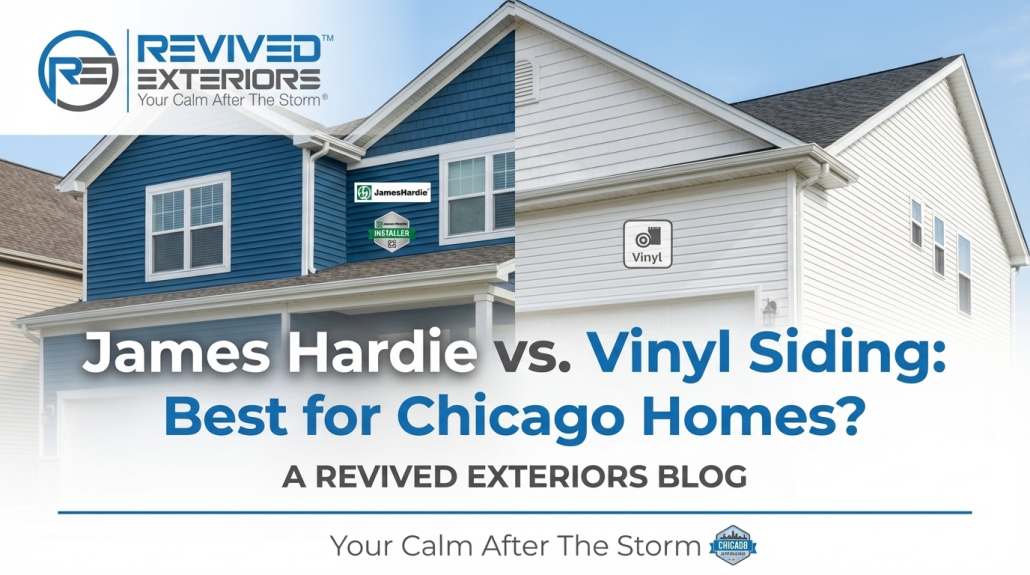
Living in Chicago means your home has to endure some of the most punishing weather extremes in the country. From the blistering humidity of July to the sub-zero wind chills of January, your siding is the first line of defense against the elements. If you are considering a siding replacement, you have likely narrowed your choices down to the two heavyweights: James Hardie Fiber Cement and Vinyl Siding.
At Revived Exteriors, we have installed miles of both across the Chicagoland area. We know that the "best" choice depends entirely on your budget, your neighborhood architecture, and your long-term goals for the property. This guide cuts through the marketing fluff to compare these materials specifically against the backdrop of Chicago’s unique climate and housing market.
Quick Verdict: Which is Best for Chicago?
For most Chicago homeowners, the choice comes down to this: Choose James Hardie if you prioritize curb appeal, ROI, fire resistance, and historic accuracy (essential for Bungalows and Greystones). It handles freeze-thaw cycles better but costs more upfront. Choose Vinyl Siding if you want a cost-effective, virtually maintenance-free solution that offers excellent insulation options without the need for periodic painting.
Material Showdown: Fiber Cement vs. PVC Explained
Before analyzing performance, it is crucial to understand what you are actually putting on your walls. These materials are fundamentally different in composition.
James Hardie (Fiber Cement)
James Hardie siding is a composite material made of Portland cement, sand, water, and cellulose fibers. It is engineered to mimic the look and feel of natural wood but with significantly higher durability. It is heavy, rigid, and feels substantial to the touch.
Vinyl Siding (PVC)
Vinyl is made from Polyvinyl Chloride (PVC) resin. It is a plastic product that is extruded into panels. It is lightweight, flexible, and the color is baked through the entire material, meaning scratches are less visible.
The Chicago Climate Test: Performance Analysis
Chicago’s weather is notorious for a reason. We experience temperature swings of over 100 degrees Fahrenheit throughout the year. Here is how each material holds up.
Phase 1: Surviving the Freeze-Thaw Cycle
The freeze-thaw cycle is the silent killer of building materials in Illinois. Water seeps into cracks, freezes, expands, and shatters material.
- James Hardie: Engineered specifically for our climate zone (HZ5). It is highly resistant to expanding and shrinking. It does not become brittle in sub-zero temperatures.
- Vinyl: Standard vinyl expands and contracts significantly with temperature changes. If nailed too tightly during installation, it can buckle or warp. In extreme cold, older or lower-grade vinyl becomes brittle and can shatter if struck by hail or a stray baseball.
Phase 2: The ‘Windy City’ Factor (Wind Load & Rattling)
Whether you are in a high-rise path or an open prairie suburb, wind load is a serious consideration.
Vinyl siding is installed using a "hanging" method to allow for thermal movement. However, this loose installation can lead to rattling noises during high winds—a common complaint in open areas. James Hardie is blind-nailed securely to the sheathing. It is rigid and heavy, meaning it stays silent and secure even during those 60 mph gusts off Lake Michigan.
Phase 3: Summer Humidity and Mold Resistance
Chicago summers are humid. Vinyl is naturally resistant to moisture and will not rot. However, if water gets behind the vinyl (common with poor installation), it can get trapped. Hardie board is resistant to rot and warping, but like wood, it requires proper flashing and installation to ensure moisture doesn’t affect the substrate.
Aesthetics & Neighborhood Fit: Bungalows, Greystones, and HOAs
Chicago isn’t just a city of siding; it’s a city of brick, stone, and historic architecture. The visual weight of your siding matters.
The "Deep Grain" Difference
James Hardie offers a deep, authentic wood grain look (Select Cedarmill) that is often indistinguishable from real wood from the curb. This makes it the preferred choice for upscale renovations.
Vinyl has come a long way, but up close, the seams where panels overlap are visible (unless you opt for longer lengths), and the texture can sometimes appear artificial or "plastic-y" compared to fiber cement.
Historic District Regulations: Where Vinyl is Banned
This is a critical, often overlooked point for Chicago residents. If you live in a designated Historic District or own a classic Chicago Bungalow in certain preservation zones, vinyl siding may be restricted or banned.
Local preservation commissions often favor James Hardie because it maintains the architectural integrity of historic homes. It mimics the lap siding used in the 1920s without the rot issues. Before you sign a contract for vinyl in a historic zone, check your local ordinances—or ask us to check for you.
Cost & ROI: Breaking Down the Numbers for Chicago Real Estate
The cost difference is usually the deciding factor for homeowners. However, you must look at the total cost of ownership.
Upfront Costs vs. 20-Year Ownership Costs
| Factor | Vinyl Siding | James Hardie Siding |
|---|---|---|
| Initial Cost | $ (Low to Mid) | $$$ (Mid to High) |
| Maintenance | Wash annually (Low) | Repaint every 15-20 years (Mid) |
| Lifespan | 20-40 Years | 30-50+ Years |
Vinyl is significantly cheaper to install—typically 20% to 40% less than Hardie. However, Hardie holds its value longer.
Resale Value Impact in Cook/DuPage Counties
According to the annual Remodeling Cost vs. Value Report for the East North Central region (which includes Chicago), fiber cement siding replacement consistently provides a higher Return on Investment (ROI) than vinyl. Buyers in the suburbs look for “Hardie Board” as a premium feature in listing descriptions.
The ‘Hidden’ Third Option: High-End Insulated Vinyl vs. Hardie
There is a middle ground often ignored in this debate: Insulated Vinyl Siding. This isn’t the flimsy plastic skirting you see on sheds. This is high-grade vinyl fused to rigid foam insulation.
- Impact Resistance: The foam backing makes the panel much stronger, solving the “hollow” sound and feel of standard vinyl.
- R-Value: It adds a layer of insulation to your home, helping reduce utility bills during Chicago winters—something standard Hardie board does not do inherently (though Hardie can be installed over foam).
- Cost: It bridges the price gap between standard vinyl and Hardie.
Installation Realities: Timeline and Seasonality Challenges
In Chicago, the construction season is short. This affects your installation timeline.
Vinyl is fast to install. A skilled crew can wrap a standard home in a few days. It is lightweight and easy to cut.
James Hardie requires specialized craftsmanship. It is heavy and requires special cutting tools to manage silica dust. The installation takes longer, which translates to higher labor costs. Furthermore, Hardie cannot be painted in freezing temperatures, so if you install pre-primed boards in December, you may have to wait until spring for the final paint job. Choosing ColorPlus® Technology (pre-finished boards) solves this winter installation bottleneck.
Noise Reduction: A Chicago Specific
Do you live near O’Hare, Midway, or a CTA train line? The acoustic properties of your siding matter. James Hardie, being a dense cement product, offers superior noise dampening compared to standard hollow vinyl. If blocking out the roar of a jet engine or the rattle of the ‘L’ is a priority, fiber cement is the clear winner.
Final Verdict: Who Should Choose Hardie vs. Who Should Choose Vinyl
Choose James Hardie Siding If:
- You plan to stay in your home for 10+ years.
- You live in a historic district or high-value neighborhood.
- You want the look of real wood without the rot.
- Fire resistance and storm durability are top priorities.
Choose Vinyl Siding If:
- You have a tighter budget for renovations.
- You want a truly “set it and forget it” low-maintenance exterior.
- You are flipping the property or moving within 5 years.
- You want extra insulation built directly into the siding panel.
At Revived Exteriors, we believe an educated homeowner makes the best decisions. Whether you choose the premium durability of James Hardie or the cost-effective versatility of Vinyl, our team is ready to ensure the installation is flawless.
Ready to upgrade your home’s exterior?
 Revived Exteriors


 Revived Exteriors

