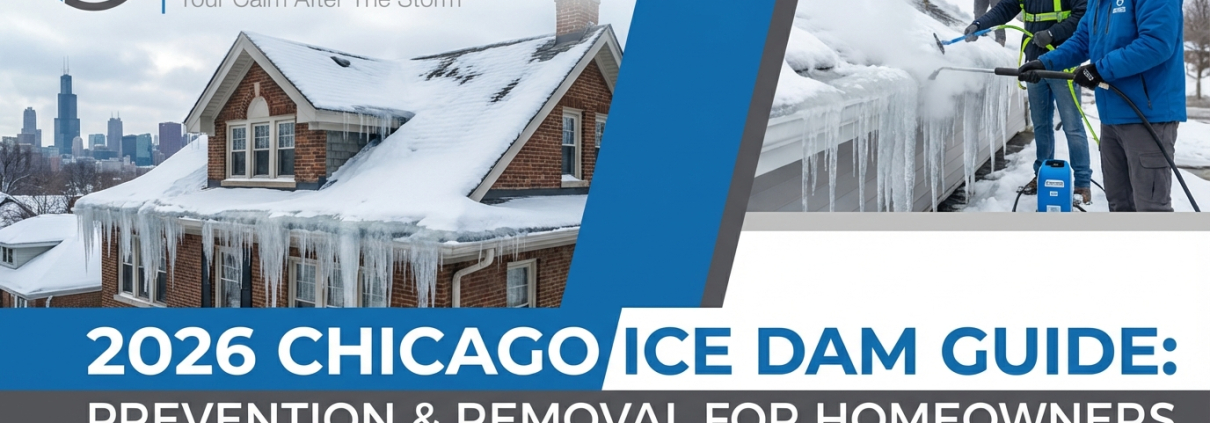
2026 Chicago Ice Dam Guide: Prevention & Removal for Homeowners

2026 Chicago Ice Dam Guide: Prevention & Removal for Homeowners

Chicago ice dams are one of the most common and damaging winter roofing problems homeowners face. While Chicago winters are beautiful, they can also be brutal. Ice dams—those seemingly innocent ridges of ice that form along roof edges—can lead to serious water damage inside your home.

Homeowners in Chicago search for information on ice dams because they want to protect their homes from costly water damage caused by melting snow and ice. They want to understand how to prevent ice dams from forming and what to do if they already have them. The desired outcome is a safe, dry home and peace of mind during the winter months. Revived Exteriors is here to help you achieve that outcome with expert advice and reliable service.

Revived Exteriors understands the unique challenges Chicago winters pose to your home. With over 25 years of experience serving the Chicago area, we’re committed to providing superior craftsmanship, quality products, and a stress-free customer experience at fair market prices.

Chicago ice dams forming on residential roof

How Chicago Ice Dams Damage Roofs and Homes | How They Form

An ice dam is a ridge of ice that forms at the edge of a roof, preventing melting snow and ice from draining properly. This can cause water to back up under the shingles and leak into your home, leading to damaged ceilings, walls, and insulation.

Ice Dam Definition: A ridge of ice that forms at the edge of a roof, blocking melting snow and ice from draining off the roof.

The Ice Dam Formation Process: Step by Step

  1. Uneven Roof Temperatures: Warm air escapes from the attic, warming the upper roof surface.
  2. Snow Melts: Snow melts even when outdoor temperatures are below freezing.
  3. Water Refreezes: Melted water refreezes near the colder eaves.
  4. Ice Dam Forms: Ice builds into a ridge that blocks proper drainage.
  5. Water Backs Up: Water pushes under shingles and leaks inside the home.

Understanding this process is the first step in preventing ice dams. By controlling roof temperature and drainage, you can significantly reduce your risk.

Chicago Ice Dams: Why They Are So Common

Chicago’s climate creates perfect conditions for ice dam formation. Frequent freeze-thaw cycles cause snow to melt and refreeze repeatedly, accelerating ice buildup along roof edges.

Many older Chicago homes also lack modern insulation and ventilation standards. Combined with heavy snowfall, these factors make ice dam prevention essential for homeowners throughout the city and surrounding suburbs.

Identifying Ice Dams: Warning Signs Homeowners Should Watch For

  • Visible ice ridges along roof edges or gutters
  • Large icicles forming consistently in one area
  • Water stains on ceilings or exterior-facing walls
  • Peeling paint or bubbling drywall
  • Wet attic insulation

If you notice these signs, prompt action is critical to avoid serious structural damage.

Preventing Ice Dams on Chicago Homes

Improve Attic Insulation and Ventilation

Proper insulation prevents heat from escaping into the attic. In Chicago, attic insulation should typically reach an R-value of R-49 to R-60. Balanced ventilation using soffit and ridge vents keeps roof temperatures consistent.

Safe Roof Snow Removal

Using a roof rake from the ground helps remove snow before ice dams form. Focus on the lower roof sections and always prioritize safety.

Heated Cables and Ice Melt Systems

Professionally installed heated cables or panels create drainage channels that reduce ice buildup. These systems should always be installed by qualified professionals familiar with Chicago winters.

Ice Dam Removal: Safe and Effective Options

Professional Steam Ice Dam Removal

Steam removal is the safest and most effective way to remove Chicago ice dams. It melts ice without damaging shingles, flashing, or underlayment.

For additional cold-climate building standards, homeowners can reference guidance from the U.S. Department of Energy.

Revived Exteriors provides professional steam ice dam removal throughout Chicago and nearby suburbs using specialized equipment and trained technicians.

DIY Ice Dam Removal: What to Do (and What NOT to Do)

  • Use roof rakes to remove snow
  • Apply calcium chloride ice melt (never rock salt)
  • Create drainage channels using ice melt socks
  • Never chip ice with tools
  • Never climb icy or steep roofs
  • Never use pressure washers

The Cost of Ice Dam Damage in Chicago

  • Roof deck and shingle repairs
  • Interior ceiling and wall damage
  • Mold remediation
  • Increased energy bills

Preventive measures and timely removal often cost far less than repairing unchecked ice dam damage.

Insurance Coverage for Ice Dam Damage

Most homeowner insurance policies cover ice dam damage, but coverage varies. Always document damage and contact your insurance provider promptly.

Choosing a Chicago Ice Dam Removal Company

  • Local experience
  • Steam-based equipment
  • Proper licensing and insurance
  • Verified reviews and references

Revived Exteriors has over 25 years of experience protecting Chicago homes from winter roof damage.

Preparing Your Home for Future Chicago Winters

  • Inspect roofing annually
  • Clean gutters before winter
  • Trim overhanging branches
  • Consider gutter guards

Conclusion: Staying Ahead of Chicago Ice Dams

Ice dams are a serious but preventable problem for Chicago homeowners. With proper insulation, ventilation, snow removal, and professional assistance when needed, you can protect your home and avoid costly repairs.

Because Chicago ice dams are driven by local climate, insulation quality, and roof design, addressing the root cause is always more effective than repeated emergency repairs.

Ready to Get Started?

Superior craftsmanship, quality products, and a stress-free customer experience delivered by a family-owned team with over 25 years of experience.

Visit Our Homepage

A large piece of hail asphalt shingle roof

Hail storms are known to wreak havoc on homes and roofs. High winds and flying debris can cause significant damage, even if the storm is not a big one or if it’s only a small amount of hail.

And the thing with hail is that the damage it potentially leaves is not always immediately apparent. This means that homeowners might not even know they have any roofing issues until it’s too late and leaks start to spring up.

So how can you spot potential issues and stay on the safe side?

Here are some tips from your roofer on how to recognize hail damage on roof systems and what to do if you find any. Read on!

Missing or Broken Shingles

The first thing you can do is inspect your roof for missing or broken shingles, which is one of the most obvious signs of hail damage. This is something that you can do from the ground, as missing shingles can usually be easily noticed.

Hail can cause shingles to crack, break, or even be torn off entirely. So, if you see any missing pieces, or if any of the shingles are damaged or dented, it’s likely that your roof has been hit by hail. It’s important to have any damage repaired as soon as possible to avoid further damage or leaks.

Dents in Gutters, Gutter Screens, or Downspouts

Hail can also damage gutters and downspouts, so that’s what you should check out next. Inspect your gutters and downspouts to see if they have suffered any hail damage – look for dents, cracks, or holes, and if you see any, chances are it’s from hail.

And to avoid any further issues and potential leaks, make sure to give your roofing contractor a call so that they can recommend the best next steps.

Other Signs of Impact on Your Roof and Siding

Look for any other signs of impact on your roof and for anything out of the ordinary. Some of the points to look out for are any spots that are black in color, dark dings that look like bruises on your roof, and, of course, any dents, cracks, or holes in your roof and its parts.

Be on the lookout for cracks in the chimney, skylights, if you have them, and damaged vents, as well.

In addition to that, you may also notice the loss of surface granules on your shingles, which may expose the roof felt, or your shingles and/or mat that appears a bit too shiny.

These are all signs of issues and, if left unrepaired, may lead to more serious consequences. Calling a trusted local roofer to take a look will be your best bet to stay safe, dry, and protected under your roof.

Revived Exteriors Is “Your Calm After the Storm”

If you suspect that your roof has been damaged by hail, it’s important to have it inspected by a professional as soon as possible. They will be able to tell you for sure if there is damage and what needs to be done to repair it. So, don’t wait until you have a leak to call a roofer – by then, the damage will already be done.

Reach out to your reliable hail damage repair contractors at Revived Exteriors, and let us provide you with the much-needed peace of mind and quality service.

Close-up of icicles hanging from the edge of a darkened roof in a cold, winter setting. The background is slightly blurred, emphasizing the sharpness and detail of the icicles—a testament to quality work by your trusted roofing contractor.

While winter snowfall can often be exciting and fun, when it comes to your roof, it’s anything but. If you’re unprepared for what the cold weather inevitably brings, the snow, ice, and other unpredictable outside elements can wreak havoc on your roofing system.

At Revived Exteriors, we are dedicated to providing full and superior roofing protection to all of our Arlington Heights IL residents. This is why we’ve prepared for you a list of the most common winter roofing issues that you should be on the lookout for this coming winter.

By being aware of what awaits, no issue will get by you, and you’ll be able to address them in a timely manner.


Click Here For a Free Consultation


1. Condensation

Condensation occurs when warm air is combined with a cold surface. And if your attic isn’t well insulated, that creates the perfect environment for condensation to happen. This, in turn, can lead to other issues, such as mold and mildew growing and damaging your home’s structure, as well as moisture build-up that can cause other issues throughout your home.


2. Wind Damage

Since Arlington Heights and the areas surrounding Chicago are known as very windy, homeowners should be on the lookout for gusts of heavy winds in the coming months. When their speed picks up, they can do a lot of damage, to the point of loosening up your asphalt shingles. If you notice some of your shingles on the ground, call our Revived team ASAP.


3. Leaky Flashing

Flashings are the metal pieces placed throughout your roof with the purpose of directing water away from the vulnerable areas of your roof, such as intersections of different elements. In case they weren’t installed properly, they can start to break away from the roof and cause heavy leakage, especially during heavy snowstorms. In order to prevent this from happening, you can inspect your flashings twice a year to make sure they’re firmly in place.


4. Overhanging Tree Limbs

When your home is surrounded by trees, there’s a high risk that a wind might blow the branches onto your roof, windows, or siding and cause serious damage. This is even more likely during the unpredictable weather that winter brings. Luckily, this problem is easily solved by simply trimming the tree branches and protecting your home and everyone inside it.


5. Snow Build-Up

When snow builds up on top of your roof, it causes a lot of additional pressure on the entire structure and becomes too heavy to hold. This can result in many structural issues that can pose a serious threat. On top of that, when snowfall melts on your roof, it can create leaks that will spread fast and cause irreparable damage if not addressed on time. Regular roof inspections and snow removal can help you avoid all of this and keep your roof in top shape. 


6. Ice Dams

Ice dams form when the heat rises from the warmer sections of your roof and meets the freezing parts. While it’s difficult to prevent ice dams from forming completely, it is possible to minimize them. How? With good insulation and a proper roof ventilation system.


Call Revived Exteriors for the Best Residential Roofing Services

Contact your best Arlington Heights IL residential roofing contractor for the highest quality roofing services. We conduct our work with respect, integrity, and outstanding customer service while ensuring your residential roof remains in top shape no matter the weather. 

We guarantee you superb end results and a long-lasting roof that will give you and your family great peace of mind for many years to come.


Click Here For a Free Consultation

Illustration showing how an ice dam on a roof causes water leakage into the house, wall and ceiling damage, and trapped water, with heat escaping through the attic. Reach out to a roofing company for roof replacement to prevent these issues.

1) Lack of Insulation

Snow begins to melt due to the heat escaping through the attic from a lack of insulation. This causes moisture to build up in the attic space when it heat and cold mix. The moisture is usually evident if you look at the nails. Nails will typically show water gathering on the tip and many times this drips down and although it’s not a roof leak, it may feel like it is when you see a stain on your ceiling.

2) Insulation Covering Intake Vents

It’s important to keep the heat in your home to reduce energy costs and ensure a comfortable temperature in the bitterly cold winter. However, covering the intake is a common mistake.  Energy Star agrees and states on their website the following: “The most common mistake homeowners make when installing insulation is to block the flow of air at the eaves. NEVER COVER ATTIC SOFFIT VENTS WITH INSULATION — use rafter vents and soffit vents to maintain airflow.” The goal is to have your attic space as close to the same temperature as the outdoors. The roof needs to breathe in that air from the outside. It’s the equivalent of covering your mouth and nose while trying to breathe in. Just like a lack of insulation, it may appear there is a roof leak but it is not.

3) No Baffles or a limited amount of baffles

Baffles are typically made from plastic or Styrofoam and shaped in a manner to allow air to flow over the insulation at the eaves of your home

If you have insulation pushed into the eaves and don’t have baffles, use a rake to pull it away at a minimum.

Again, a roof leak won’t be the root cause of your water-stained ceiling, but it will appear to be at first glance.

4) Lack of Exhaust Vents

Just like intake, the exhaust is equally important. Using the same analogy when breathing, you have to release the air that you breathe in. Since warmer air rises, the cold air comes in through the intake and then rises when warm which naturally forces it to leave through the exhaust vent. This reduces the likelihood of a roof leak caused by ice dams while also increasing the lifespan of your residential roofing system.

The ideal conditions for an attic space is to have a balanced airflow.  This can be done by having 50% of air coming in from the eaves through intake vents and 50% through exhaust vents. More on this topic and additional reasons for a roof leak can be found in our post “Roof Leaks With No Rain Or Snow”

5) Uninsulated Furnace Vents

This causes heat in the winter to buildup in the attic which leads to an increase in condensation. This causes ice or moisture to build up on the inside of the plywood sheathing and mimics a roof leak across the entire span of the roof. This may lead to many leaks showing up in your home.

What About Ice Dams?

Ice dams are where any of the 5 conditions listed above cause snow to melt and it ends up freezing at the end of your roof near the gutters. This builds up over time and pushes its way under the shingles. When it starts to thaw, water penetrates the inside and is, in fact, a roof leak.

What can be done to prevent an ice dam roof leak

A simple tool can be used called a telescoping roof rake. These are sold at most big box remodeling stores. They cost roughly 50-$60 and help keep you safe by doing this from the ground.

Make sure you are not standing directly under the area you are removing snow from since it can be heavy and possibly bring ice down with it.

This is a preventative measure that doesn’t correct the root of the problem. Having a roofing or insulation contractor inspect your attic space will provide you with a better understanding of the cause of your ice dam problem and ideally provide you with a solution on how to reduce the likelihood of it happening again.

Installing a leak barrier (commonly referred to as Ice and Water Barrier) like GAF’s WeatherWatch® can help prevent the water from penetrating through your plywood sheathing beneath the shingles. In Chicago and most the midwest, it’s required a minimum of 24 inches past the warm wall of your home. The easiest way to see where your leak barrier should be installed up your roof is to have one person measure 24 inches from your interior wall (at the eave side of your home) and another person to watch through a window and mark this on the exterior of your home. Another common way is to measure from the home’s exterior corner and add about 6-9 inches for your wall. Going above 24 inches is a safer bet to ensure you don’t get a roof leak.

What can be done to remedy an ice dam roof leak

There are many companies that also offer ice dam steaming. This would be a great option if preventative measures weren’t done or, there is an excessive amount of ice already built upon the eave which caused immediate leaks.

However, if you have a leak from an ice dam and you steam it, brace yourself for an excessively larger amount of water to breach at a rapid pace. Drill a small hole where you see the current leak coming through and have a large bucket ready to catch most of it. It would also be a good idea to have dry towels handy at this point.

Additional reasons why your roof may leak can be found in this video

Call Revived Exteriors today!


Close-up view of an asphalt shingle roof with visible wear, slight discoloration, and uneven edges, indicating it might be time to consult a roofing contractor.

Shingles and shakes can get damaged from heavy hail storms, resulting in water leaks and interior damage. But how severe must the storms be to inflict significant damage and what can homeowners do to avoid costly repairs?

Gauging the Potential Danger

Hail ranges in size from tiny pebbles to massive chunks as large as oranges and softballs. In order for a
hail storm to inflict significant damage on the average asphalt shingled roof the hail stones should be about the size of a golf ball. Depending on the density and shape, smaller stones can also dent and destroy your roof. Hail that falls with considerable speed is also powerful enough to damage shingles.

Most major hail storms consist of larger stones that can easily punch holes in asphalt shingles of any age. And it seems like storms are growing in intensity every year.

Three Types of Damage

Hailstones wreck asphalt shingles in three different ways. The first problem creates leaks almost immediately, while the other two will present a significant problem several months after the storm.


Look for the following signs to determine how hailstones have damaged your asphalt shingles:

  • Immediate Damage to the Top Layer of the Shingle – larger, sharp hailstones can tear into the upper layer of your asphalt shingles, ripping off the protection and allowing water to penetrate through to your roof deck.
  • Cracked Shingle Mat – fast falling or dense hailstones can actually crack the mat of your asphalt shingles, which inevitably results in water leakage. The damage is not visible from a distance; small crescent-shaped black lines will appear upon close inspection.
  • Shingle Bruising – small hailstones can bruise the upper layer of your shingles, pushing asphalt granules down into the shingle. With exposure to rain and UV rays, those granules will rapidly disappear and the shingle will deteriorate beyond repair. Leaks appear about six to twelve months after shingle bruising.

WHAT CAN HOMEOWNERS DO TO AVOID ROOF DAMAGE DURING HAIL STORMS?

It’s difficult to predict the weather, and you cannot adequately protect your roof from extreme weather like hail or severe winds. The best way to avoid hail damage is by keeping your roof in good condition.

Have a hail damage repair contractor in Arlington Heights IL inspect the shingles on a regular basis, and take care of any repairs promptly and professionally. Pay attention to any evidence of moisture inside your home as well.

Invest in high quality architectural asphalt shingles when replacing your roof. These thicker products are denser and provide greater protection against top layer damage, cracked mats and shingle bruising. A good quality shingle costs more initially, but will save you time and hassles later on.

Talk to your insurance company about the extent of coverage in your current policy. Storms often result in multiple claims around your area, and some companies can be difficult to deal with. Be clear on what type of coverage you currently have against hail damage. If necessary, upgrade your policy now before any damage has been done.

Hail storms can cause significant and costly damage to asphalt shingles, resulting in roof leaks and expensive repairs. Keep your roof in peak condition, invest in quality products and have the roof inspected if you suspect hail damage. Nature can deal a heavy blow to your asphalt shingle roof with hail stones of various shapes and sizes.

A close-up view of beige vinyl siding on a building, installed by a renowned roofing company. The siding panels are arranged horizontally and show slight dents and imperfections.

Hail storms can cause damage to your roof, gutters, vents, and air conditioning units. But hail storm damage to siding may be difficult to detect without knowing what to look for. Insurance companies often need to differentiate between mechanical damage and hail damage, and homeowners need to be familiar with the evidence of hail-related damage. James Hardie siding, known for its durability, provides a stronger defense against hail damage than vinyl siding due to its fiber cement construction, making it a preferred choice for those in hail-prone areas.

Two Common Types of Hail Storm Damage to Vinyl Siding

Vinyl siding generally stands up well against severe weather. Lightweight and designed to withstand UV rays and extreme wind, vinyl siding can crack or chip when large, dense, fast-falling hailstones hit the panels. However, James Hardie siding offers greater impact resistance than vinyl, thanks to its unique material composition, which is designed to withstand hail and other debris. Details of this damage include:

• Cracks – siding panels crack in arched patterns, most often in unsupported sections between the ridge and valley.

• Chips – chips occur on the bottom of vinyl siding panels and can be seen best when viewing the panel from below.

These two types of siding damage are generally accepted as hail-related, while other nicks, marks, gouges, and breakage can result from mechanical incidents like grass cutting (rocks or pebbles fly up from the mower, hitting the vinyl siding with excessive force).

Is My Vinyl Siding Vulnerable?

Besides the size, density, and speed of hailstones, certain factors can make your vinyl siding more vulnerable to damage. You can control some of these factors, and regular maintenance or inspections may alert you to potential risks, but your siding remains at the mercy of recurring storms. Choosing a more resilient siding option, such as James Hardie siding, may help reduce the risk of hail-related damage, as it’s engineered to withstand severe weather conditions and has a longer lifespan than vinyl. These three factors affect the risk level for hail-related siding damage:

• Quality of the Siding – higher-grade siding products, made in thicker profiles and with heavy-duty vinyl construction, are less prone to hail damage. Siding ranges in thickness from 0.35 to 0.55mm, and different manufacturers offer varying levels of quality in terms of the materials used.

• Age of the Siding – siding becomes brittle over time, and that level of brittleness leaves siding vulnerable to small, rapidly falling hailstones.

• Condition of the Siding – even high-quality siding deteriorates due to UV ray exposure and all that nature throws at it. Walls that face south tend to absorb the majority of harmful exposure and may be more vulnerable than other sections. Extensive interior damage may result from cracks or chips in your vinyl siding. Leaving the plywood, framing, and insulation exposed to moisture can introduce mold and mildew, which results in expensive and upsetting repair bills in the future. Chips also allow pests to enter your home, and any sort of siding damage creates an unsightly appearance for your property.

Hail Damage Siding Repair Cost

Hail can cause various levels of damage to the siding, depending on the storm’s strength and the siding’s quality. Hail damage can vary from small dents to bigger cracks or even holes. Siding hail damage affects home protection since the inner part of the house walls is exposed to the elements. It can lead to trapping moisture in the walls and, therefore, mold growth. Not only that, but cracks and holes can seem attractive for small animals looking for shelter.

The cost of the damage repair depends on various factors. The first and the most straightforward factors are levels of damage and quality of the siding. Of course, the type of siding plays a significant role. For example, vinyl and aluminum siding repair will be cheaper than wood or fiber cement siding repair since the first two materials are cheaper in general. However, James Hardie siding, although more costly than vinyl, may save you from frequent repairs since it’s engineered to withstand hail damage more effectively. Keeping this in mind, the price of hail damage siding repair can roughly range from $300 to $3000. It can also exceed this number if the siding area affected by damage is large and everything needs to be replaced.

Which Siding to Choose?

Vinyl siding is the most commonly used, but it is also the most prone to damage. Hail storms can cause cracks, indents, and chips. Severe ones can even puncture holes and expose the inner wall. So, if your vinyl siding is dented, warped, or cracked, it’s telling you that a repair might be a good idea. For homeowners seeking durability, James Hardie siding is a stronger option as it resists cracks and punctures more effectively, making it a sound investment in areas prone to severe weather.

Aluminum siding is more durable, but it is still sensitive to hail damage. Recognizing hail’s impact on this siding is easy. You just have to look for small and round dents. Their exact size will depend on the size of the hailstorm itself and the wind speed. Another potential problem with aluminum siding could be chipped paint, which exposes the metal underneath and causes rust.

Hail can cause another type of damage to wood siding, such as splits and gouges. This happens only in cases of strong hailstorms or if the needed repair isn’t done on time and new hail damages the same spot on the siding. This damage can also lead to rot, mold, and insulation issues.

Fiber cement siding is the most durable, so it’s the most resistant to the elements. This doesn’t mean that storm damage can’t appear, but it’s less likely than with other materials. Damage also appears as chipped paint or small indents, but the wall can rarely become exposed. James Hardie siding, a type of fiber cement, excels in these conditions, offering minimal risk of exposure, even in severe storms, and is often favored for its longevity and resilience.

Be Clear on Your Insurance Coverage

Just as discussed when considering hail-damaged asphalt shingles, you need to find out the extent of coverage regarding vinyl siding hail damage on your existing insurance policy. In some cases, an insurance company will pay to replace the siding on your entire home. In other cases, and more frequently, your coverage only extends to the damaged sections or damaged walls. Find this out beforehand and inquire about coverage additions if your existing policy is inadequate. Be sure to hire only reputable, local companies for siding damage repairs. These firms offer solid customer service and proven experience for everything you need to repair, from hail storm damage to vinyl siding. If you choose a more durable siding like James Hardie, you may also want to check with your insurance provider to see if they offer coverage benefits for hail-resistant materials.

Have you experienced storm damage to your siding?  What did you do about it? Did it work?

Close-up of a large hailstone on a wet ground, surrounded by smaller hailstones and a few scattered leaves, reminding homeowners of the importance of residential roofing maintenance.

HAIL DAMAGED ROOF? HOW TO DEAL WITH HAIL DAMAGE ON YOUR HOME?

Storms have shaped the Chicagoland area, and continue to fill the forecast with strong winds and hail. Have you checked your home for hail damaged roof, or other components on the exterior of your home and do you know the signs to look out for? Hail damage can leave your house vulnerable to serious issues. Without a prompt response and hail damage repair services in Arlington Heights IL, hail will severely reduce the value of your property and possibly lower the quality of daily living.

ACT QUICKLY

Ignoring hail damaged roof signs may be  a bad idea for two reasons:

  • Damage Worsens – Roof and siding damage caused by hailstones get worse over time, as deterioration sets in and important features of your home become less and less reliable.
  • Opportunities Expire – Insurance companies place limitations on hail damage claims, meaning that you need to inspect for hail damage roof claims and contact the insurance agent right away in order to file a valid claim.

Homeowners can protect their property and get the most from their insurance coverage by acting quickly after a storm. The longer you wait to tackle hail damage to your roof or siding, the greater risk of loss.

Repairing the hail damage becomes necessary should you desire to sell your property. A battered appearance will shrink the value of your home, and the need for immediate repairs drives buyers away. Living in a home with hail damage is also dangerous, as shingle damage and siding damage can escalate into something worse and end up costing homeowners a fortune in repair bills.

HOW TO GET REPAIRS DONE RIGHT

With the right tools and a close up view, the average homeowner can identify hail damage locations. But the untrained eye cannot accurately assess an entire house, and the services of an expert are required to get repairs done properly.

Hire a contractor to inspect your roof and siding, as well as trim, chimney and other areas of your home that may have been damaged by hailstones.

Contact your insurance agency right away, and have the information provided by your contractor close at hand. You may also need to provide proof of insurance and/or licenses for the contractor, so be sure to ask for those at the inspection.

Hiring the right contractor will ensure your hail damage is repaired properly, on time and on budget. Look for the following characteristics:

  • Established company – not a start up, inexperienced and risky.  This can easily be checked with your local Better Business Burea
  • Local company – not an out-of-state firm that chases storms to cash in on repair needs. An easy telltale sign is out of state license plates.
  • Solid and straightforward warranty – steer clear of contractors that will not provide proof of warranty. Look for manufacturers who are willing to back the contractor’s workmanship warranty.  This is reserved for only the top 2-3% reputable and qualified contractors in the market.
  • High rating with local Better Business Bureau, Google, Facebook, Yelp, Guild Quality and other sites or industry associations – with a reputation for customer service

Hail damage reduces the quality of your roof and siding and could result in a 25 percent drop in property value. Check for damage right after a storm and call a local, established contractor for an inspection. Act fast to protect your property and get your claim filed within the insurance company’s limitations. Call Revived Exteriors today to book an inspection.

Revived Exteriors is your local roofing company in serving our neighbors in Arlington Heights, IL, and Chicagoland suburbs.   We work hard to educate homeowners on everything they need to know how to identify and repair hail damage or wind damage to their homes.

© Copyright | Revived Exteriors | *DISCLAIMER: Revived Exteriors, Inc. is neither a broker nor a lender. Financing is provided by third-party lenders unaffiliated with Revived Exteriors, Inc., under terms and conditions arranged directly between the customer and such lender, all subject to credit requirements and satisfactory completion of finance documents. Any finance terms advertised are estimates only. Revived Exteriors, Inc. does not assist with, counsel or negotiate financing, other than providing customers an introduction to lenders interested in financing Revived Exteriors customers.