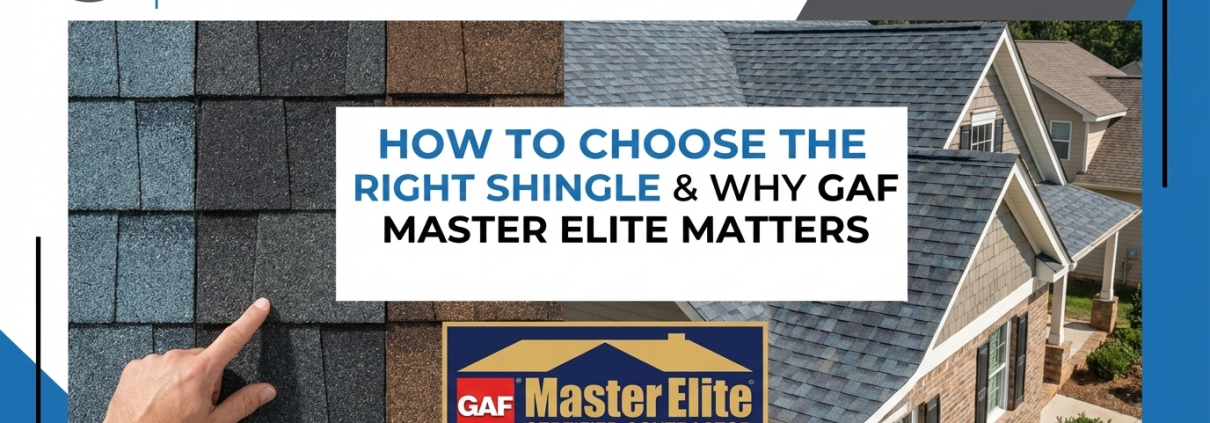
How to Choose the Right Shingle & Why GAF Master Elite Matters

How to Choose the Right Roof Shingle for Your Home

Your roof is your home’s first line of defense against Chicago’s harsh winters and stormy summers. If you’re wondering how to choose the right roof shingle, you’re not alone. Many homeowners feel overwhelmed by the number of roofing options and conflicting advice. At Revived Exteriors, we believe the answer lies in matching the right shingle system with the right certified installer.

This guide explains exactly how to choose the right roof shingle for your home’s architecture, budget, and climate—and why working with a GAF Master Elite® contractor is the only way to fully protect that investment.

1. How to Choose the Right Roof Shingle: Style, Budget, and Performance

Choosing the right roof shingle isn’t just about color—it’s about long-term protection. Your roof can account for up to 40% of your home’s visible exterior, affecting both curb appeal and resale value. In Illinois, durability matters just as much as appearance.

  • Architectural style: Colonials often pair well with slate-style designer shingles, while ranch homes typically benefit from architectural shingles.
  • Length of ownership: Long-term homeowners benefit most from lifetime warranty systems.
  • True cost: Cheaper shingles often cost more over time due to repairs and premature replacement.

2. Understanding the Three Main Types of GAF Roof Shingles

As a GAF Master Elite contractor, Revived Exteriors installs GAF products for their consistency and performance. Asphalt shingles generally fall into three categories:

3-Tab Shingles (Entry-Level)

These flat shingles offer minimal wind resistance and a shorter lifespan. We rarely recommend them for replacements due to their limited durability.

Architectural Shingles (GAF Timberline HDZ®)

Architectural shingles provide dimensional appearance and superior wind resistance. GAF Timberline HDZ® shingles feature LayerLock™ Technology and qualify for the WindProven™ Limited Wind Warranty.

Designer & Luxury Shingles

Designer shingles replicate slate or wood shake while offering modern durability. They significantly enhance curb appeal and long-term value.

3. Climate Factors That Affect How to Choose the Right Roof Shingle

Wind Resistance

Midwest storms demand shingles with mechanical locking technology. LayerLock™ shingles outperform standard adhesive-only systems.

Algae Protection

GAF’s StainGuard Plus™ technology prevents black streaks caused by algae, helping your roof stay visually clean for decades.

Design Visualization

Use tools like the

GAF Virtual Remodeler

to preview colors on your actual home before choosing.

4. Why Installation Matters More Than the Shingle

Even the best shingle will fail if installed incorrectly. The majority of roofing failures stem from workmanship—not material defects.

5. What Is a GAF Master Elite® Contractor?

Less than 2% of roofing contractors qualify as GAF Master Elite®. This status requires proper licensing, insurance, verified reputation, and ongoing factory training.

6. Exclusive Benefits of a GAF Master Elite Contractor

Only Master Elite contractors can offer the Golden Pledge® Limited Warranty, which includes long-term workmanship protection.

7. Golden Pledge Warranty: Ultimate Protection

  • 50-Year Non-Prorated Material Coverage
  • 25-Year Workmanship Coverage
  • 40-Point GAF Factory Inspection

8. The GAF Lifetime Roofing System

  1. Leak Barrier
  2. Roof Deck Protection
  3. Starter Strip Shingles
  4. Lifetime Shingles
  5. Cobra® Ridge Ventilation
  6. Ridge Cap Shingles

9. Long-Term Value Comparison

FeatureStandard RooferGAF Master Elite
Material WarrantyProrated50-Year Non-Prorated
Workmanship2-5 Years25 Years
InspectionNone40-Point Factory

10. Final Thoughts on How to Choose the Right Roof Shingle

Knowing how to choose the right roof shingle means understanding both the product and the installer. A properly installed GAF roofing system provides peace of mind that lasts decades.

Ready to Build Your Lifetime Roof?

Contact Revived Exteriors today for a complimentary inspection.

Get Your Free Estimate →

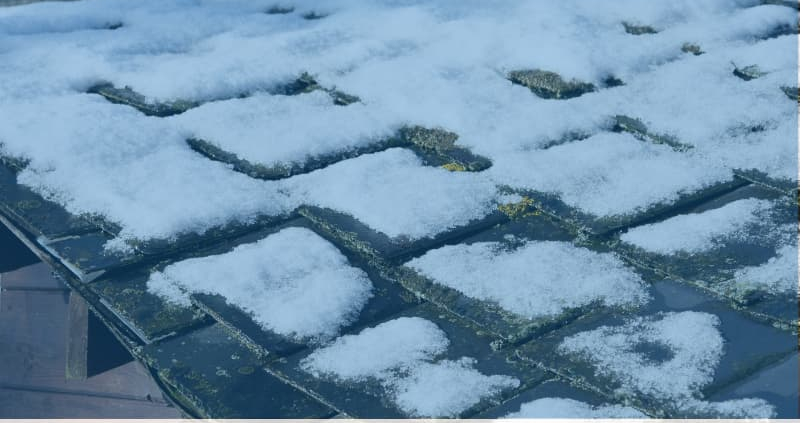
The snow-covered roof, showing visible wear and tear, hints at the relentless Illinois winters. The Revived Exteriors logo sits in the bottom corner, symbolizing a commitment to durable roofing materials and thermal efficiency.

If you are an Illinoisan, you know a thing or two about our harsh weather, especially winters. They are cold, snowy, and often unpredictable. Not only that, but snowstorms, freezing rain, and ice aren’t out of the ordinary. This weather hits hard on roofs in general but on thermal efficiency as well. So, if you don’t want your energy bills to skyrocket over the winter, this blog about roofing for Illinois winters and top winter roofing solutions is for you! 

We are going to list the best roofing materials for intense Illinois winters, which serve as thermal insulation roofing options at the same time. If you are replacing your roof or are in the process of building a new property, keep on reading so you can choose the best option for you!

Cold Weather Roofing Technology

Simply put, these are types of roofs or roofing accessories that are a professional’s first choices when working in a climate with harsh winters. These roofing solutions put up with freezing temperatures well and are durable enough to withstand a certain amount of snow or ice pressure. 

First to mention here are heated roofing systems. These systems use electric components underneath the actual roofing material to prevent snow accumulation or ice dam formation. Self-sealing shingles, on the other hand, adhere so tightly to one another that they prevent moisture from coming in through the roof structure. 

Ice and water shields are also located under the roofing materials. These are waterproof membranes that create an additional protective layer. 

Last but not least, we have roof ventilation. Good roof ventilation is key for every roof in this climate since it prevents uneven melting and refreezing processes. 

We can’t stress enough that it’s really important to hire a knowledgeable roofing contractor like Revived Exteriors for this job. We are experts in ventilation systems and are well aware of the weather and common roofing problems around here! 

Energy-Efficient Roofing Materials

All of these aforementioned materials are made to keep your home warm in the winter and cool in the summer. Therefore, they can net you energy savings all year round. For colder climates, the best options are high-insulation materials, as mentioned below.

One of the options are solar reflective shingles, which have reflective granules in them to retain the heat. Clay and concrete tiles are also a good choice because they absorb the heat during the day and release it slowly. Metal roofs, shingles, and tiles are also durable roofing materials for snow, so they are even more welcome in this climate. 

Insulative Roofing Choices

These roofing choices are all about reducing heating expenses by trapping warm air inside and keeping interior spaces comfortable. They are designed to keep a stable temperature inside, and in that way, they help balance out the heating systems.

They are often made of multiple layers like underlayment, insulating panels, and weather-resistant coatings. Because of that, they are known for very good insulation properties and for enhancing roof longevity.

Those are: 

  • Foam insulation panels
  • Built-up roofing (BUR)
  • Asphalt or composite shingles with insulating underlayment 

Choose Revived Exteriors 


Are you thinking about how to make your home as energy-efficient as possible? Are winter-proof roofing systems at the top of your mind? We are here to help you to choose the best option for your home and your needs. 


Revived Exteriors has built hundreds of energy-saving roofs and have received great feedback from past clients. We can assure you that we are the right roofing contractor in Arlington Heights, IL, for professional roofing work! 


Feel free to reach out to us and schedule a free estimate without any obligations.

Right Roofing Contractor in Arlington Heights, Illinois: What You Need to Know

Choosing a roofing professional can be just as important as choosing the material for your roof. Let’s be honest—the roofing industry can be a dog-eat-dog world. It’s not uncommon to hear horror stories about clients hiring inexperienced rookies to take care of their roofs, unlicensed and uninsured to boot!

If you’re a first-time home or business owner looking into hiring licensed roofers in Illinois, you’ll want to keep reading. At Revived Exteriors, we’ll give you a quick rundown on how best to find the right residential and commercial roofers for you in Arlington Heights, IL.

Researching

In this day and age, it is imperative you use the online web to find the right roofing contractor in Arlington Heights. It’s a good starting point to jump off of; other than “local roofer near me”, some other keywords you can search up in your area are: “licensed roofers in illinois,” “roofing contractor reviews,” “roof inspection services,” and “roof repair and maintenance.”

Most roofers worth their salt will have their own website available to the public 24/7. From there, you can look up their roofing estimates and quotes, along with roofing warranties and guarantees and what their roof installation standards are like when working on new building projects or roof replacements. A lot of roofers also partner with other brands and companies, so you can be assured of the quality of the materials they use and roofing contractor qualifications.

Many of these websites have a FAQ section, so feel free to read through them if you have any lingering questions when you’re putting together your next roofing project management team. They’ll also have a number for you to call, a form to fill out, or an email address you can write to for fast and easy contact. Thanks to the internet, it’s now easier than ever to find the perfect roofing contractor in Arlington Heights!

Still, that’s not all you can do. If you’ve exhausted all your options online, try the real world—ask your neighbors next door! They may be more than happy to share their experience with the contractor who worked on their roof. You can also get in touch with your HOA and ask about local roofing regulations, as well as what goes on in roofing service contracts and what to expect before penning your signature.

Evaluating

So you’ve found your roofer—now what? Let’s not sugarcoat it; one of the most important things to a roofer is reviews. And it’ll be important to you as a client, too!

Read as many roofing contractor reviews as possible—the good, the bad, and the ugly—to form a picture of your roofer before deciding to go with them. Use websites such as Angi’s, BBB, or Yelp to find your roofing contractor’s business and see what people have to say about them. If you’re ever uncertain about someone’s experience or version of events, don’t hesitate to ask the roofer themselves—more often than not, roofers will be glad to answer any questions or concerns you may have about a particular project or service.

If the reviews satisfy your expectations, go ahead and pick out a few of the roofing contractors you’ve chosen and evaluate each and every one. Compare and contrast their pros and cons, including what sort of roofing warranties and guarantees they have, and—perhaps most important of all—their roofing estimates and quotes. You want a stylish, new roof that won’t eat through your wallet, after all!

Signing the Contract

So, you’ve scoured the web, read through the reviews, done your research, and finally found your roofer. Congrats! Before signing anything, however, keep the following three points in mind:

  1. Double-check all roofing certifications, licenses, and insurance.
  2. Ensure all details, timelines, and costs of your project are clearly outlined.
  3. Keep copies of all documentation for future reference.

Once you’re confident these conditions have been met, feel free to call up your roofer of choice, sign that contract, and get the roof of your dreams.

Choose One of the Best in Illinois for Your Roof

As a top-rated roofing contractor in Arlington Heights, IL, Revived Exteriors is here to serve you with unmatched workmanship and unbeatable prices. Recognized as one of the fastest-growing companies in the US from Inc. 5000, we’re proud to offer our services in not only roofing, but in siding, window replacements, gutters, and hail damage restoration as well.

We can also help with roofing insurance claims in Illinois. Got questions? Find the answers at Revived Exteriors, and discover what makes us different from the rest today!

Selecting the Best Roof Coating for Your Needs

If you’re a home or business owner looking to prolong your roof’s lifespan and durability, then there’s no better time than now to dive into the wonderful world of roof coatings!

That’s right; you can get even more benefits from your roof even after its installation. Although roof coatings are mostly reserved for commercial properties, they can also be applied to residential homes as well–just be prepared to pay a little extra to accommodate particularly steep or difficult roof structures. Read on to fully grasp the advantages of membrane coating!

What Is a Roof Coating and How Does It Help?

Put simply, a roof coating is a protective layer that’s fully applied on top of an already-existing roof. Most coatings are in liquid form and completely elastic, allowing them to stretch and return to their original shape. Their purpose is to better the condition of an aging roof, create watertight seals to prevent leaking, and to reflect heat off of a roof. We find this makes them pretty useful in lowering energy costs during the summer months!

Which Roofs Can You Coat?

As a rule of thumb, a roof coating should never be placed on asphalt shingle roofs. This is because the ingredients in most roof coatings negate the effects of what’s found in asphalt shingles, essentially making them redundant. If you’re unsure whether or not you can coat your shingled roof, consult with the manufacturer of your shingles before making a decision.

With that being said, here are some roofs that greatly benefit from a nice, thick layer of roof coating!

TPO

TPO roofs–also known as thermoplastic polyolefin–can greatly benefit from a rubber roof coating, such as silicone. This single-ply membrane is most notable for its bright white coloring, and can usually be found on commercial buildings.

EPDM

Much like TPO roofing, EPDM (ethylene propylene diene terpolymer) is another contender for extra rubber roof coating. This material is cost-effective, easy to install, and can withstand the elements for over 50+ years with proper maintenance.

Metal

Whether they’re aluminum, copper, or steel, metal roofs are the ideal choice for plenty of homes and businesses alike. For a metal roof coating, these roofs would work well with a SEBS or silicone coating (SEBS is a reflective, solvent-based coating that helps repair and restore metal roofs). This extra layer of protection acts as a buffer against the sun’s rays, and keeps your metal roof as waterproof as possible.

Built-Up Roofing

You’ll find most built-up roofing (BUR) systems on commercial buildings. Unlike TPO roofing, which are single-ply, BUR systems are made up of multiple layers. These layers are made up of roofing insulation, fasteners, plates, and adhesives, and are topped off with a material such as roofing asphalt. Their efficiency can be made even more superior with a coating of rubber silicone or acrylic.

Modified Bitumen

A cousin to the BUR system, modified bitumen is comprised of asphalt combined with rubber or plastic, then refined with fiberglass. This makes it uniquely flexible yet sturdy. The best roof coating for modified bitumen is agreed to be acrylic, as they’re incredibly durable and have a high level of UV resistance.

Look For Premium Roofing Craftsmanship in Revived Exteriors

Roofing in Arlington Heights, IL, doesn’t need to be migraine-inducing. Since we started our business over ten years ago, Revived Exteriors has completed thousands of projects with superior workmanship and top-rated customer service. We’ll help you find the right coating for your roof–so call our team for your first free consultation today.

An image of a house with green shutters and a well-maintained roof.

Dormer roofs, which are often utilized to enlarge the living space and let in more natural light, are an example of an architectural feature that ably integrates form and utility without sacrificing either. Because they can be found in a wide variety of types and styles, incorporating them into a structure is an excellent method for creating an unequaled appearance and atmosphere.

This article will explore the topic of dormer roofs, examining their function, many designs, and architectural advantages, so make sure you keep reading!

What Is a Dormer Roof?

Dormer roofs are unique architectural enhancements that incorporate vertical walls, the roof framework, and windows to increase natural light and expand available space. The word “dormer” originates from the French term “dormir,” meaning “to sleep,” as dormer roofs were initially intended to provide extra living or sleeping areas in the attic.

Is It a Roof or a Window?

Actually, it’s both! Dormer roofs are architectural enhancements that incorporate vertical walls, the roof framework, and windows to increase natural light and expand available space. The word “dormer” originates from the French term “dormir,” meaning “to sleep.” This makes sense since they were first intended to give extra living or sleeping areas in the attic. Some even perceive them as small rooms with windows since they have a bit of floor space and headroom. To simplify, the dormer roof definition offers a concise definition. By this explanation, a dormer is a window that projects vertically from a sloped roof.

Why Should I Consider a Dormer Window?

Dormers will greatly change your attic space and the overall feeling of your home. They give a range of advantages for homeowners. Firstly, they allow ample natural light to reach the rooms, creating a more enjoyable and vibrant living space. Secondly, they minimize the need for artificial lighting during daylight hours, contributing to energy efficiency and cost savings


But not just that. In addition to enhancing the aesthetic appeal of your home, the panoramic vistas made possible by dormer windows are another perk. Hence, they improve the airflow so more clean air can circulate inside the facility.

Styles of Dormer Roofs

Some common types of dormers include gable, shed, hipped, eyebrow, and segmental arch dormers. Gable dormer is characterized by its triangular roof, and they add a touch of traditional elegance to a building’s exterior.

On the other hand, shed dormers feature a single-sloped roof, providing a modern and versatile design option. Hipped dormers have a roof that slopes on all sides, while eyebrow dormers feature a smooth, curved roofline. Segmental arch dormers, as the name suggests, have an arched roof design, adding a unique architectural element to the structure.

Functionality and Benefits of Dormer Roofs

As you can imagine, dormers are installed for a variety of reasons, but the foremost among them is to maximize the living area. They serve as a great way to increase the usable space on the top floor or in the attic, and the residents are free to put this extra room to any use they see fit.


They improve a house’s ventilation and natural sunlight, too. The integration of windows into the dormer walls allows natural light to enter the interior, making it unnecessary to use artificial lighting during the day. 


In addition to this, they alleviate the monotony of a simple roofline. This results in an increase in both aesthetic appeal and architectural personality. But that’s not all! They can be designed to match the style of the surrounding structures or create a unique focal point, blending harmoniously with the overall design theme.

How Do You Install a Dormer Roof?

Firstly, you call your roofers since its installation requires a bit of effort and a lot of skill. Dormers can transform an attic from a dark, stuffy storage area into a bright, airy, and comfortable living space, so it’s not merely an ornamental addition.


They should be installed with great precision since they connect to the roof in two locations (at the dormer’s walls and on the dormer’s roof). Waterproofing the dormer and surrounding sections requires ice, water shielding, and step flashing.


How to Build It?


For educational purposes and for you to plan accordingly, we’ll provide you with a rough draft of how to build a dormer roof. We highly recommend that your first step is to contact a reliable roofer like Revived Exteriors, not only for the building part but to help you make a proper decision. As we already mentioned, not every dormer roof can be built into the current structure, nor will it fit into every design. 

Planning and designing are really important, and basically, if you have no plan, you’ll have no dormer! Decide with your roofer on the style of a dormer and create a detailed plan that includes measurements, materials, and angles. In this part of the process, you should also get all the necessary permits since the dormers are changing the house structure. 

This part is also important so that you can see your final dormer roof cost. There are a lot of factors affecting the cost, and a number could easily be about 4000 $ to strapping 30 thousand dollars or even more. One of the key factors is whether you’re building a roof with a dormer or adding a dormer roof extension on the present roof. 

Your process should most definitely include the following steps:

  • Preparing the existing roof 
  • Dormer roof framing 
  • Dormer roof construction
  • Sheathing and waterproofing
  • Installing roof material and siding
  • Interior work
  • Final adjustments and inspections 

Types of Dormer Roofs


Some common dormer roof styles include gable, shed, hipped, eyebrow, and pitched arch dormers. Each of them serves a different purpose in an aesthetical and architectural but also in a functional way. There’s a need for a variety of them because of the distinct needs that come with all the roof shapes, house aesthetics, and structural requirements. Therefore, some serve as an additional space or as a light source, while others focus on visual appeal or just as an integration for a roof line. 


Shed dormer roof


Shed dormers are made of flat and single-plane roofs. They slope downwards and in the same direction as the main roof but at a mild angle. These dormers are way wider than the others and are great as an additional space. Not only do they provide headroom but also a good amount of actual inside space. 


Flat dormer roof


As its name says, this roof has a flat and horizontal roof surface that sits vertically on the main roof. Due to that, it appears modern and minimalistic. Also, it is easier to build, but it doesn’t give a lot of space. Its use is mainly for lightning purposes and to create a spacious feel in smaller spaces. 


Gable dormer roof


This type of dormer is nearly the same as a gable roof. It is triangular and has a pointed roof at the same angle or pitch as the main roof. Two sloping sides make a gable form at the front, and because of that, it is considered to be a traditional type of dormer. Gable dormers are highly used since they are tall and broad


Eyebrow dormer roof


Because of the curved but low profile shape, this dormer reminds of an eyebrow shape. People consider it an elegant dormer since it fits seamlessly into the roof line. It is spacious and often high, but its aesthetic makes it popular and often used. 


Hip dormer roof


This type of dormer reminds of a hip roof. It has three sloping sides, so it is very stable, but also challenging to build or sometimes even to fit into the designs. It is connected to the main roof and, therefore, can be a great option for tough weather conditions


Pitched dormer roof

This one can be similar to the gable dormer due to the pitch its two slope sides are forming. The difference is that the pitched dormers can vary from steep to gentle slopes. This is why the pitched dormer is frequently used in various designs.


Dormer roof repair


Potential problems with dormers aren’t much different than those of a usual roof. Of course, trying to prevent them by hiring constructors with experience in this field is important. This is due to integration with the existing roof line and many spots that need flashing and waterproofing. All roofers know how to do this on a regular roof, but dormers require extra knowledge

Want to Install a Dormer Roof? Choose Revived Exteriors

As we talked about earlier, dormer roofs improve a home’s livability by providing additional space, natural light, ventilation, and vistas. Do yourself and your property a favor and hire a reliable roofing builders like Revived Exteriors if you want to add a dormer to the house. 


Therefore, if you want to install a dormer roof, our esteemed employee Cody Wolff will help you with the installation because of his extensive experience in residential roofing and exterior restorations. 


Revived Exteriors is the best roofing contractor in Arlington Heights, IL, to hire if you want professional installation of a dormer roof on your home


Feel free to reach out to us without delay and schedule a free estimate without any obligations.
How Much Does a New Roof Cost in Chicago, IL, in 2024?

At some point in your life, you had to replace your home roof—and if you haven’t yet, you probably will! If the work was done poorly, you likely don’t want to hire the same roofing company. Moreover, you must repeat the steps repeatedly: research information, find a trustworthy company, calculate expenses for your home, and more. Not to mention, it can be a frustrating endeavor if you just bought a property and it’s the first time you’re doing such a major project. But don’t worry; if you’ve found this blog, you no longer have to search. 


Each property is different, right? With that in mind, each project’s costs will vary depending on several factors. So, the first thing you must consider is the material your roofing contractors will use and its quality. Long story short, if you choose something high-quality, your roof—and therefore home—will last longer. Okay, you’ve decided what you want to use, so the second thing you might ask yourself is; what if there’s something else that I have to replace or install so that my roof is functional? 


You will want to hire reputable roofing contractors that will get the replacing done right. This final step is crucial because experts will ensure your roof lasts long, whereas inexperienced roofers may do more harm than good to your roof and, in turn, your home. 


As a home or business owner, knowing a rough price range is always better than groping around in the dark. We can provide you with an average cost estimate, but in the end, if you want to know the exact total cost of replacing a new roof, you’ll have to contact knowledgeable and experienced roofing contractors to take a look.


With that out of the way, let’s explore what influences the average cost of a new roof in Chicago, IL! 


Choose a Suitable Roof Installation for Your Area


In Chicago, there are often short fluctuations in temperature, humidity, cloudiness, and wind direction, typical of continental climates with cold winters and warm summers. The first thing you want to research is the roof material that best suits your area, needs and preferences. 


There are many options on the market you can choose from for your roof installation in Chicago, so let’s see what options you have. 


For your home roof installation or repair, you can choose between the following:


  • Asphalt shingles (fiber glass & organic),
  • Cedar wood,
  • Metal, 
  • Rubber, 
  • Tar & gravel,
  • Spray foam, and
  • Clay or concrete tile.


Each of these has its own advantages and disadvantages, but no matter which option you choose, make sure it’s high-quality and not something cheap that won’t last long. 


There are also different types of commercial systems:


  • Single-ply roofing,
  • TPO, EPDM, PVC roofing,
  • Flat roofing, and
  • Metal roofing.


Let’s break down the residential and commercial materials costs, so make sure you keep reading!


Cost of Installing a New Roof for Residential Buildings


Many factors will affect the final cost of a new roof restoration or repair for your home, but first, let’s explain the main components of a residential roof so that you know what your roofing contractors are talking about when the project starts. 


  • Decking (or sheathing) – Made from plywood that aims to provide a foundation for roofing, siding, or flooring. This helps to strengthen your home’s system internally and externally. 


  • Underlayment – The main task of underlayments is to provide extra protection in case the roofing leaks.


  • Flashing – Pieces of metal used to prevent water infiltration around vent pipes, chimneys, walls, dormers or valleys. Furthermore, when you install flashing, water is directed away from the roof interior.


  • Ventilation – With proper ventilation, air can freely pass, so it’s good to have a system to reduce the humidity and condensation that might build in your home.


  • Insulation – The primary purpose is to retain heat during winter and cool during summer, thus reducing heating and cooling costs. 


  • Material – Asphalt shingles, metal, etc.


Average Cost of Residential Roof Materials


Asphalt shingles are known as the most affordable, and they are vastly used throughout the U.S. If your neighbor has installed them and you’ve discussed the price with them, it doesn’t mean you’ll pay the same as they did. 


On average, most residential roofs will cost between $5,000 and $11,000 for the material alone. This is not a fixed number; other factors will affect the final cost. For example, there are many different manufacturers on the market and each has their own market price for their products. 


Don’t forget that installing these will also be added to the final tally. Professional roofing contractors will give you an estimate and decide how complex replacing the roof will be. If your roofing contractor has a lot of knowledge and experience, the price may also increase—but you’ll have peace of mind knowing the job is done right!


Cost of Installing a New Roof for Commercial Buildings


Whether it’s for restoration or repair purposes, commercial roofs are more complex to install because they require a different approach to ensure durability and longevity.


  • Decking – The story regarding decking is the same as with residential roofs; it’s a base layer that will provide a stable foundation for the rest of the roof components.


  • Insulation – Insulation aims to regulate the temperature inside the building to improve energy efficiency.


  • Membrane – The membrane is a layer that provides waterproofing and protects the roof from severe weather damage. A commercial roof membrane is commonly made from EPDM, TPO, or PVC. 


  • Drainage systems and ventilation – The drainage system helps prevent water buildup and damage. In addition, proper ventilation will allow air to circulate and prevent moisture from occurring. 


  • Flashing  – Waterproof material used to seal joints and seams in roof systems, primarily used in areas around vents, chimneys, and other roof penetrations to prevent water from seeping in.


New Roof Cost in Chicago per Square Ft


Flat roofs range between $4 and $30 per square ft, while metal roofs can range between $4 and $40, depending on what you want installed. Furthermore, TPO, EPDM and PVC roofs can cost between $4 and $12 per square ft. 


These are some of the average rates for these types of roofs, but as mentioned, it can all depend on several factors. In addition, make sure you hire a knowledgeable commercial roofing company because, after all, they are experts in this field. 


How Long Should a Roof Last in Chicago?


Much like the price point, a roof lifespan depends on what you went with. Asphalt shingles, for example, can last up to 25-30 years with proper maintenance. However, something sturdier, such as metal or slate, can last anywhere from 40 to 70+ years! Factors that can influence roof durability include your area’s climate conditions, how often you get professional inspections and maintenance done, and the quality of the product your contractors worked with. 


When it comes to a new roof or needing to repair something, being stingy doesn’t pay off; the higher grade the material and service provided, the longer you get to enjoy your roof!


Get a New Roof With the Help of Revived Exteriors


Whether you need residential or commercial services, Revived Exteriors will gladly help you with any of your roofing problems and needs. We boast over 30 years of experience, many satisfied customers, and the best quality materials on the market so that you can rest assured your roof will last. In addition we also offer gutter replacement, solar, siding, and window installation services, and so much more. 

Contact Revived Exteriors—the best roofing contractors in Chicago, IL—today!

The benefits of hiring a professional roofing contractor in Illinois

As you probably know by now, being a homeowner brings many responsibilities, one of which is taking care of your roof. We should also note that the roof of your home is probably the most demanding part of the house you have to pay attention to since a leaking roof, for example, can destroy the whole house and bring unimaginable financial costs and losses.

However, when the time comes and the roof starts showing issues, some homeowners decide to play roofing contractors themselves, or even they decide to put their trust in some jack-of-all-trades contractor instead of calling a professional roofing contractor. In the following lines, we will explain why this is a mistake and why you should always hire a professional roofing contractor when you notice your roof is not performing well.

Let’s Highlight the Word Professional

This subheadline may sound unclear, but the point is to emphasize that professional roofing contractors are experts. They are fully committed to roofing, follow all safety guidelines, and are thoroughly trained, experienced, and knowledgeable.

Furthermore, professional roofing contractors take responsibility for their work since they know how important the recommendations and praises of former customers are. Without them, their work wouldn’t be recognized or rewarded with new customers.

Roofing Services of Professional Roofing Contractors

Professional roofers are skilled in offering a variety of roofing services, such as roof inspection, roof repair, roof replacement, roof maintenance, roof installation, and similar roofing services that can only be provided by a professional. This is in contrast to some home improvement craftsmen you planned to hire. The most beneficial service a qualified roofer can offer is probably a roof inspection. An expert will know where to check for any problems during the inspection, how to properly identify them, and how harmful they are to your roof. Nobody else except a qualified roofing contractor can handle it.

Licensed, Bond, and Insured

You, not the professional roofer, should place greater value on the fact that they carry the appropriate licensing and insurance. This ensures that the work you’ve contracted the roofer to undertake will be completed in accordance with industry standards and to your satisfaction. In addition, you are totally protected from any liability in the case of an accident occurring on your property during work on your roof since you will not be held responsible.

Warranty and Exclusive Roofing Materials

Not one, but two more benefits of hiring a professional roofing contractor are warranty and high-quality roofing materials that can be provided only by a roofer that has a special deal with manufacturers. There is no need to emphasize how beneficial it is to have a warranty on roofing work for which you have paid a significant amount of money, are we right?

Specialized Roofing Services

In addition to the general roofing services we have just mentioned, a professional roofing contractor may also provide special roofing services like hail and wind damage evaluation reports, storm damage restoration services, and insurance claims. Only a professional roofing business can offer these services, which will get you back on your feet quickly.

Revived Exteriors, Your Go-to Professional Roofing Contractor in Illinois

If, after reading this text, you wonder where you could find a professional roofer who will provide you with the benefits listed above, the answer is right in front of you.

Revived Exteriors, a roofing Chicago IL company with over several decades of experience in the roofing and home improvement industry, is your definite choice if you are looking for a professional roofing contractor who is fully certified, qualified, and specialized in all kinds of roofing services. Besides standard roofing services like roof replacement and roof repair for residential and commercial subjects, Revived Exteriors offers storm damage restoration services, along with storm damage insurance claims, hail and wind damage restorations, plus solar, windows, siding, and other home renovation services.

Therefore, if your roof in Illinois needs attention, don’t hesitate to contact Revived Exteriors, a leading exterior home improvement company that cares for all Illinois residents.

© Copyright | Revived Exteriors | *DISCLAIMER: Revived Exteriors, Inc. is neither a broker nor a lender. Financing is provided by third-party lenders unaffiliated with Revived Exteriors, Inc., under terms and conditions arranged directly between the customer and such lender, all subject to credit requirements and satisfactory completion of finance documents. Any finance terms advertised are estimates only. Revived Exteriors, Inc. does not assist with, counsel or negotiate financing, other than providing customers an introduction to lenders interested in financing Revived Exteriors customers.