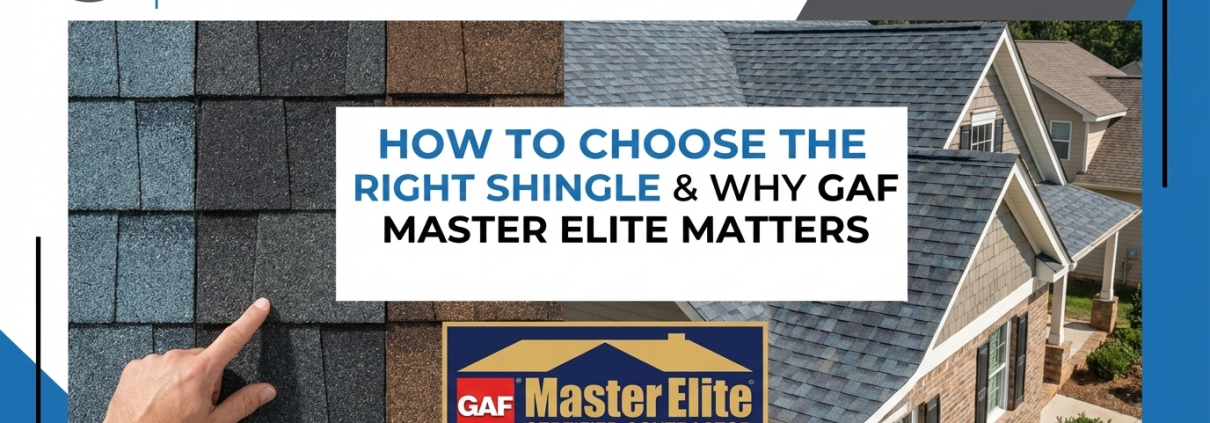
How to Choose the Right Shingle & Why GAF Master Elite Matters

How to Choose the Right Roof Shingle for Your Home

Your roof is your home’s first line of defense against Chicago’s harsh winters and stormy summers. If you’re wondering how to choose the right roof shingle, you’re not alone. Many homeowners feel overwhelmed by the number of roofing options and conflicting advice. At Revived Exteriors, we believe the answer lies in matching the right shingle system with the right certified installer.

This guide explains exactly how to choose the right roof shingle for your home’s architecture, budget, and climate—and why working with a GAF Master Elite® contractor is the only way to fully protect that investment.

1. How to Choose the Right Roof Shingle: Style, Budget, and Performance

Choosing the right roof shingle isn’t just about color—it’s about long-term protection. Your roof can account for up to 40% of your home’s visible exterior, affecting both curb appeal and resale value. In Illinois, durability matters just as much as appearance.

  • Architectural style: Colonials often pair well with slate-style designer shingles, while ranch homes typically benefit from architectural shingles.
  • Length of ownership: Long-term homeowners benefit most from lifetime warranty systems.
  • True cost: Cheaper shingles often cost more over time due to repairs and premature replacement.

2. Understanding the Three Main Types of GAF Roof Shingles

As a GAF Master Elite contractor, Revived Exteriors installs GAF products for their consistency and performance. Asphalt shingles generally fall into three categories:

3-Tab Shingles (Entry-Level)

These flat shingles offer minimal wind resistance and a shorter lifespan. We rarely recommend them for replacements due to their limited durability.

Architectural Shingles (GAF Timberline HDZ®)

Architectural shingles provide dimensional appearance and superior wind resistance. GAF Timberline HDZ® shingles feature LayerLock™ Technology and qualify for the WindProven™ Limited Wind Warranty.

Designer & Luxury Shingles

Designer shingles replicate slate or wood shake while offering modern durability. They significantly enhance curb appeal and long-term value.

3. Climate Factors That Affect How to Choose the Right Roof Shingle

Wind Resistance

Midwest storms demand shingles with mechanical locking technology. LayerLock™ shingles outperform standard adhesive-only systems.

Algae Protection

GAF’s StainGuard Plus™ technology prevents black streaks caused by algae, helping your roof stay visually clean for decades.

Design Visualization

Use tools like the

GAF Virtual Remodeler

to preview colors on your actual home before choosing.

4. Why Installation Matters More Than the Shingle

Even the best shingle will fail if installed incorrectly. The majority of roofing failures stem from workmanship—not material defects.

5. What Is a GAF Master Elite® Contractor?

Less than 2% of roofing contractors qualify as GAF Master Elite®. This status requires proper licensing, insurance, verified reputation, and ongoing factory training.

6. Exclusive Benefits of a GAF Master Elite Contractor

Only Master Elite contractors can offer the Golden Pledge® Limited Warranty, which includes long-term workmanship protection.

7. Golden Pledge Warranty: Ultimate Protection

  • 50-Year Non-Prorated Material Coverage
  • 25-Year Workmanship Coverage
  • 40-Point GAF Factory Inspection

8. The GAF Lifetime Roofing System

  1. Leak Barrier
  2. Roof Deck Protection
  3. Starter Strip Shingles
  4. Lifetime Shingles
  5. Cobra® Ridge Ventilation
  6. Ridge Cap Shingles

9. Long-Term Value Comparison

FeatureStandard RooferGAF Master Elite
Material WarrantyProrated50-Year Non-Prorated
Workmanship2-5 Years25 Years
InspectionNone40-Point Factory

10. Final Thoughts on How to Choose the Right Roof Shingle

Knowing how to choose the right roof shingle means understanding both the product and the installer. A properly installed GAF roofing system provides peace of mind that lasts decades.

Ready to Build Your Lifetime Roof?

Contact Revived Exteriors today for a complimentary inspection.
Get Your Free Estimate →

The Impact of Illinois Storms on Your Roof: Prevention and Repair Tips

Heavy rains, strong winds, hail, and tornadoes — all this seems to be pretty normal in Illinois. The annual property damage due to hailstorms is $93.5 per 100 residents, which is the 15th highest in the US. The property damage is the 8th highest. Then there are the tornadoes. Though it’s not as bad as some other states (looking at you, Texas and Mississippi), it’s still in the top 4 with 57 tornadoes recorded from January to September 2021.


Needless to say, the folks here understand the importance of storm-proof roofing materials. But that’s hardly enough. As the roof is the first line of defense, it’s very important to know how to protect your home proactively and address any future damage.


The Risks


Alright, we have to begin by understanding the risks of Illinois’ furious storms. We all know that the weather can be a little… unpredictable. One minute it’s sunny and calm, the next like a scene out of a disaster movie: torrential rain, hail the size of golf balls, and winds that could knock you off your feet.


So, out of all the roof repair tips in Illinois, the best tip is to fully comprehend the risks. In other words, you need to know precisely what can leave your roof battered and bruised.


The usual suspects in the lineup are thunderstorms, tornadoes, and even heavy snowfalls. Taken together, these bad boys can cause all sorts of roof damage, from missing shingles and leaks to more serious structural issues.


Building a roof using trustworthy and high-quality storm-proof roofing materials can mitigate some of this risk. But let’s face it—roof maintenance for Illinois weather is no walk in the park.


And if you ignore those problems? Well, let’s just say it’s like ignoring a leaky faucet. It might seem minor at first, but before you know it you’ve got a flooded bathroom and a hefty repair bill.


Before the Storm


They say an ounce of prevention is worth a pound of cure, and that’s especially true when it comes to your roof. You don’t want to wait until a storm hits to start thinking about roof protection.


Generally speaking, there are a lot of requests for emergency roof repair in Illinois but very few people take preventive steps. It’s only after suffering storm damage that folks kind of wise up.


It all begins by scheduling regular roof inspections. If you’re up for it, you can do it yourself. Otherwise, you can get it done professionally. The whole DIY roof repair vs. professional services in Illinois argument is something we’re not going to get into today.


The bottom line is that you need to stick to the inspection schedule. Always remember—the roof might feel fine, but it’s always good to make sure everything is in working order and safe. A good roofer can spot potential problems before they turn into problems.


You wouldn’t drive a car without regular maintenance, would you? Well, your roof deserves the same level of care. Keep those gutters clean, trim any overhanging branches that could cause damage, and consider reinforcing your roof with impact-resistant shingles or other protective measures.


After the Storm


Now, let’s talk about the roof inspection checklist post-storm when the damage is done.


Building a Resilient Roof


We’d be remiss if we didn’t discuss the importance of going beyond just repairs. Hail damage repair in Illinois, for example, can take a serious toll in terms of money and time. Having wind-resistant roofing solutions and a resilient roof in the first place will cut down on that damage by a lot.


The base material is super important. Roof damage signs after Illinois storms include damaged/missing shingles, granule loss, dents and dings, leaks and water stains, and roof sagging. Any commercial roofing company in Chicago will tell you that the most popular material is TPO, followed closely by EPDM and then PVC. These buildings are dominated by metal roofing systems, whereas coatings and low-slope asphalt take a backseat.


But why are we talking about commercial roofing? Well, as it turns out, a survey found that metal is becoming increasingly popular in residential roofing as well. That structural integrity that commercial buildings need when done the right way, can do wonders for your home as well. Here’s what Brian Haraf, the VP of Metal Sales Manufacturing Corporation had to say about that during “Roof Talk,” a program by the Western States Roofing Contractors Association:


“Metal roofing, once relegated to barns and sheds, has seen an increase in popularity in recent years. Customers may have some sticker shock when comparing metal to the pricing of traditional roofing, but the benefits far outweigh the costs.”


Single-ply roofing, steep-slope asphalt, polymer/synthetic roofing asphalt, and low-slope asphalt have all grown in popularity in recent years. Polyurethane foam is also picking up. And all of these can be considered storm-proof roofing materials.


Okay, so the storm has passed, and you’re left wondering if your roof survived the onslaught. First things first, safety is paramount. Don’t climb up on your roof unless it’s absolutely safe to do so. If you’re unsure, leave it to the professionals.


Once you’ve determined it’s safe, start looking for signs of damage. Missing or damaged shingles, leaks, dents, or any other visible issues should be noted. Check your attic for signs of water damage or leaks. It’s also a good idea to document any damage with photos or videos. This comes in handy during roofing insurance claims in Illinois more than you’d expect.


And don’t forget—even the best storm-proof roofing materials can get damaged.


Wrapping Up


And that’s about it—pre-storm, post-storm, and knowing how to tackle the challenges. You can also look into waterproofing roofs in Illinois as that’s a great way to get some protection when urgently required.


No matter how many tornado-proof roofing features your home has, the roof is the single most important point of defense. And it’s not something you can ensure with just the help of the right material. Everything from regular inspections and gutter maintenance for storm season to identifying any water leaking is important.


For good roof durability against Illinois storms, reach out to Revived Exteriors today. With the right knowledge and preventive measures in place, our friendly team can help you shelter through the storm. Call now for a FREE, no-hassle roof inspection!

A roofing contractor is replacing the roof of a house.

Having your own house is a dream for most of us, and after we reach that dream, we eventually start dreaming and planning to purchase another more suitable place. However, since most of us aren’t multimillionaires, before buying our new dream house, we must sell the old one, and the question that starts popping is whether or not to repair the roof of your old house before selling your property.

Let’s get something straight; repairing your roof is optional before putting your old house on the market. However, if the roof is in good shape, you should expect a higher selling price, which will come in handy, don’t you agree?

Therefore, when determining whether or not to invest in roof repairs before listing your property for sale, it’s important to keep the following things in mind.

Getting Roof Repair

Roof repair can be a costly undertaking. However, if your roof is in poor shape, it may prevent you from selling the house at all. If you want to sell your home quickly and for a reasonable price, fixing any problems with the roof is a must.

Also, a property with a damaged roof may be challenging to sell if your ideal buyers are picky about every detail and refuse to pay for any repairs after closing.

Likewise, if your roof was damaged by a storm not too long ago and your homeowner’s insurance covered the damage, you should get it fixed since you already have insurance, and it won’t cost you a single dime.

What’s the state of your roof like?

Before deciding whether or not you should repair the roof on your existing house, you should check its state and see how functional it is. That’s where a roof inspection can be handy, especially if it is conducted by a professional who is going to check the state of asphalt shingles, the condition of your attic, sidings, and other roofing materials. After the inspection, you’ll have in-depth knowledge about your roof’s condition.

Then, if you want to sell your home quickly and know that your roof is in poor condition, a roof repair must be conducted. The reason is obvious. Many purchasers, especially first-time buyers, are hesitant to shell out more funds for substantial renovations.

In the end, though, it’s up to you to decide whether or not to reduce your asking price and sell the house in its current condition.

Are You Willing to Repair Your Roof?

Getting a decent, well-working roof is essential if you want to sell your home for a higher price. A major roof repair might cost you some money, depending on the damage and how extensive the damage is.

Getting your roof repaired also takes time. The length of the process is determined by how quickly you can compare the roofing company quotes and estimates, get a great deal with the roofing company, and finally have the start-to-finish work. You might want to consider bad weather, as it can be the reason for delay when working on your roof project.

However, with minor repairs, all damage can be repaired at a lower price in a shorter amount of time.

Why Should I Repair It?

Possessing a roof that is in reasonably good shape might help you sell your home more quickly. It will reassure the buyer that they won’t have to spend more money on repairs just to make your property habitable.

You can also pay for a roofing specialist to provide maintenance and repair services and give a roof certification for an additional three to five years. The buyer’s concerns will be alleviated, and, as a result, their confidence in purchasing your house will increase.

So, Should I or Shouldn’t I?

When it comes to selling a home, you want to make sure you get the best deal. If you have some damage on your roof, you can get your roof repaired or get a roof replacement.

If you still need clarification about whether you should repair your roof before selling your home after reading this blog, you can call Revived Exteriors, your local roofing company in Arlington Heights, IL.

We will help you provide the information you need by performing a roof inspection to determine your roof’s condition. Then, our experienced roofers will repair any roof damage that you have and guarantee to serve you with high-quality results.

© Copyright | Revived Exteriors | *DISCLAIMER: Revived Exteriors, Inc. is neither a broker nor a lender. Financing is provided by third-party lenders unaffiliated with Revived Exteriors, Inc., under terms and conditions arranged directly between the customer and such lender, all subject to credit requirements and satisfactory completion of finance documents. Any finance terms advertised are estimates only. Revived Exteriors, Inc. does not assist with, counsel or negotiate financing, other than providing customers an introduction to lenders interested in financing Revived Exteriors customers.