
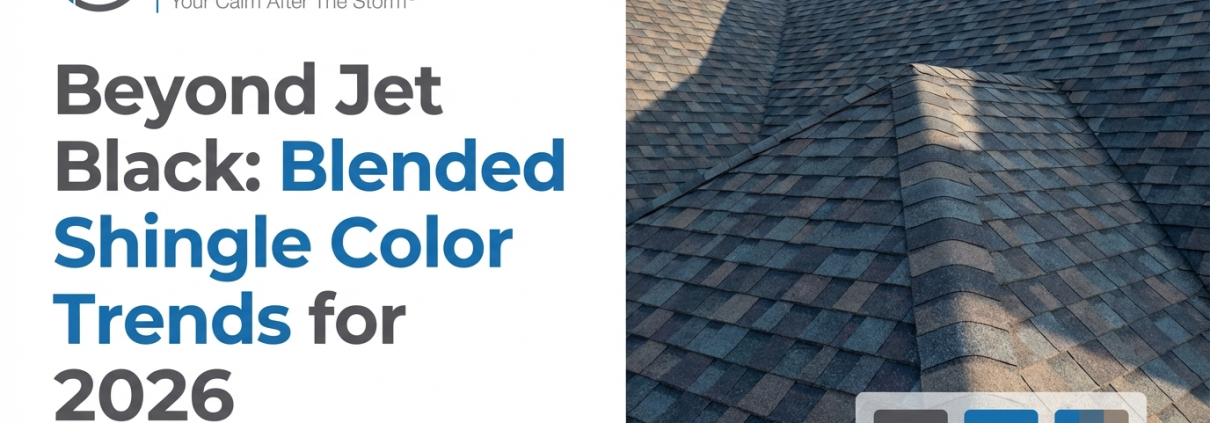
Shingle color trends 2026 are redefining how homeowners think about roofing—moving beyond flat black shingles toward dimensional, high-definition blends that add depth, character, and better real-world performance.
For decades, the standard choice for a new roof was simple: black or gray. Homeowners rarely considered the roof a primary design element, focusing instead on its functional ability to shed water. However, as we approach the mid-2020s, a massive shift in exterior design is taking place. In 2026, the trend is moving away from flat, monochromatic surfaces in favor of multi-dimensional, high-definition textures. The era of the “Jet Black” roof is being replaced by sophisticated, nature-inspired palettes that provide depth, character, and improved energy efficiency.
At Revived Exteriors, we have seen this evolution firsthand. Homeowners in the Chicago area are increasingly looking for ways to make their properties stand out while maintaining a sense of timeless elegance. Shingle color trends 2026 are not just about aesthetics; they’re about how a home integrates with its environment—and how modern technology creates a more resilient, beautiful exterior. In this guide, we’ll break down the shift toward blended shingle colors and why 2026 is officially the year of the dimensional roof.
Shingle color trends for 2026 focus on multi-tonal, high-definition blends like Owens Corning’s “Evergreen Mist.” Homeowners are moving away from flat Jet Black in favor of complex charcoal, slate blue, and earthy green palettes that offer visual depth, better hide debris, and improve energy efficiency through advanced granule technology.
Shingle Color Trends 2026: Why Dimensional Roofs Are Taking Over
The concept of a “dimensional roof” refers to the use of architectural shingles that feature multiple layers and varying color granules to create a thick, shake-like appearance. While architectural shingles have been around for years, the color science behind them has reached new heights for 2026. This year, the focus is on breaking up the visual weight of the roof. A solid black roof can often look like a heavy “cap” on a house, compressing the home’s profile. Blended shingles, conversely, draw the eye across the surface—making the home appear more expansive and grounded.
The push toward dimensionality is also a response to the “Modern Farmhouse” and “Industrial Chic” trends that dominated the early 2020s. As those styles evolve, homeowners are looking for ways to add warmth and organic texture to the stark whites and blacks of previous years. By introducing blended shingle color trends 2026, designers can soften the look of a home while still maintaining a contemporary edge. This shift represents a broader move toward biophilic design, which seeks to connect our living spaces more closely with the natural world.
Dimensionality also plays a practical role in curb appeal. A roof with a high-definition blend can mask minor imperfections and natural wear better than a solid-colored roof. As the sun moves across the sky, the different tones in the shingles interact with the light—creating a dynamic look that changes throughout the day. For Chicago homeowners, where overcast skies are common, these multi-tonal shingles provide necessary contrast even on the grayest winter days.
Thinking about replacing your roof? Start with our guide to residential roofing, or jump straight to an instant roof quote.
The Evolution of Black: Moving from Jet Black to High-Definition Charcoal Blends
For a long time, “Jet Black” was the gold standard for high-end roofing. It was seen as the ultimate neutral that could match any siding. However, the downside of a solid black roof is its tendency to show every bit of algae growth, bird droppings, and granule loss. In 2026, we’re seeing a significant decline in the popularity of flat Jet Black. In its place, “Charcoal Blends” and “High-Definition Black” have taken the lead. These shingles incorporate flecks of light gray, deep blue, and subtle brown to create a more natural, stone-like appearance.
High-definition charcoal blends offer the same sophisticated “anchor” for a home’s design as Jet Black—but with significantly more visual interest. These colors are designed to mimic the appearance of natural slate or premium wood shakes. Using varying shades of black and gray, manufacturers like Owens Corning and GAF create shadow lines that make shingles appear thicker and more premium. This is a key component of the shingle color trends 2026: using color to create the illusion of physical depth and luxury without the price tag of genuine slate.
From a maintenance perspective, charcoal blends are far superior to solid black. The multi-tonal nature of the granules helps camouflage dark streaks caused by algae and light-colored debris from nearby trees. When you choose a blended charcoal roof, your home stays looking cleaner for longer—which matters if you want maximum curb appeal with minimal upkeep.
If you’re dealing with active issues right now, see our roof repair services in Arlington Heights.
The Impact of Shadow Lines
Shadow lines are darker bands of granules applied during manufacturing to create a 3D effect. In 2026, these lines are being refined to look less like artificial stripes and more like the natural shadows cast by thick-cut cedar shakes. This subtle change in technology makes a massive difference in curb appeal—providing a level of sophistication that solid colors simply can’t achieve.
Spotlight on the 2026 Shingle Color of the Year: Evergreen Mist
One of the most exciting developments in roofing is how “Color of the Year” trends now influence exterior design. For 2026, the standout shade is Evergreen Mist. This color, championed by industry leaders like Owens Corning, represents a bold move toward nature-inspired, biophilic palettes.
Evergreen Mist isn’t a bright green—it’s a sophisticated blend with sage, pewter, and mossy undertones that shifts depending on surrounding foliage and light. The popularity of this shade signals a shift in homeowner preferences: away from harsh contrast and toward calm, organic color stories. That’s exactly what shingle color trends 2026 are all about—texture, harmony, and timeless design.
Matching Evergreen Mist with other exterior elements is surprisingly easy. It pairs beautifully with warm white siding, natural wood accents, and even dark navy or charcoal trim.
Top 5 Blended Color Palettes to Watch (Muted Greens, Slate Blues, and Warm Earth Tones)
As we dive deeper into the shingle color trends 2026, five specific palettes are emerging as the leaders for residential replacements. These blends offer a range of looks—from coastal and crisp to grounded and traditional—while delivering better real-world camouflage than flat colors.
1. Muted Moss and Sage Blends
Green-based blends (olive, sage, cool gray) are the breakout stars of 2026. They’re perfect for wooded neighborhoods and homes with stone or wood accents.
2. Deep Sea and Slate Blue
Instead of bright blues, 2026 focuses on slate-inspired blends that combine deep navy with charcoal and silver—creating a roof that resembles natural blue slate.
3. Warm Sandstone and Weathered Wood
Weathered Wood remains popular, but the 2026 versions are more complex—adding hints of copper, amber, and toasted beige for a warmer, richer look.
4. Pewter and Silver Fox
Lighter gray blends are gaining momentum because they look clean, modern, and can help manage heat gain better than ultra-dark solids.
5. Aged Copper and Autumn Harvest
This dramatic palette mixes deep browns with rust and autumn tones to mimic the look of aging copper or fall foliage—great for Craftsman-style homes.
Architectural Integration: Pairing 2026 Roof Trends with Modern Siding
A roof doesn’t exist in a vacuum—it must work in harmony with your siding, trim, and windows. The shingle color trends 2026 are designed to coordinate with popular siding choices like fiber cement and modern color palettes. At Revived Exteriors, we often help customers coordinate their new roof with James Hardie siding.
If you’re refreshing more than the roof, explore our siding services and replacement windows so your entire exterior tells one cohesive “color story.”
The Science of Depth: How Modern Granule Technology Creates “Natural” Shingle Textures
The beauty of the shingle color trends 2026 is made possible by advancements in granule technology. Today’s manufacturing patterns allow dozens of colors to be blended with precision, creating visual texture that mimics cedar shakes or slate—without the cost or weight of premium materials.
If your roof may have been impacted by hail or high winds, our storm damage and hail damage resources can help you understand next steps.
Performance & Sustainability: Which 2026 Blends Best Manage Solar Heat Gain?
Modern blended shingles can use “Cool Roof” granules engineered to reflect infrared light while still appearing dark or colorful to the human eye. That means you can get the look you want while reducing heat buildup in the attic—especially helpful during humid Illinois summers. Performance-driven materials are now a big part of the shingle color trends 2026.
If you’re considering insurance coverage for replacement, read: Roof replacement insurance coverage in Illinois.
The “Golden Hour” Effect: Maintenance of Blends vs. Solids
Multi-tonal roofs often look different throughout the day as lighting shifts—especially during sunrise and sunset. This “golden hour” effect adds depth and luxury. Blended shingles also hide debris and minor wear better than solid-colored roofs, keeping your roof looking cleaner between maintenance cycles.
Regional Guide: Choosing a Color Blend Based on Your Local Landscape
In the Midwest (including our service area in Illinois), homeowners tend to gravitate toward cooler, grounded tones—charcoals, slate blues, and forest greens. These blends complement seasonal foliage, overcast skies, and common exterior materials like brick and stone.
Conclusion: Future-Proofing Your Home’s Curb Appeal with Multi-Tonal Shingles
Choosing a new roof is a long-term decision. The shingle color trends 2026 give homeowners an opportunity to upgrade curb appeal and real-world performance at the same time. By moving beyond flat Jet Black and embracing high-definition blends, you’re choosing a roof that looks better over time, hides wear more naturally, and supports modern energy expectations.
At Revived Exteriors, our mission is to provide the “Calm After the Storm.” That includes helping you make smart design and material choices you’ll be proud of for decades. Whether you’re drawn to Evergreen Mist or the depth of a charcoal blend, we’re here to guide you with transparency and craftsmanship.
Ready to Elevate Your Home?
Superior craftsmanship, quality products, and a stress-free customer experience delivered at fair market prices by a family-owned team.

 Revived Exteriors


 Revived Exteriors