
Chicagoland Roof Leaking Without Rain? Attic Condensation!
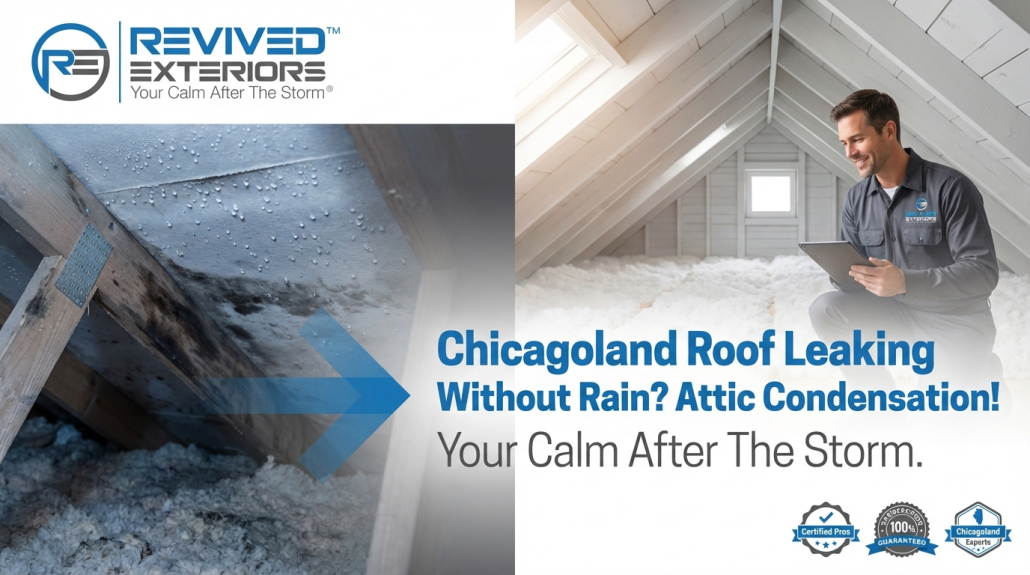
Why My Chicagoland Roof Is Leaking Without Rain: A Hidden Attic Condensation Problem
Discovering a leak in your roof is never a pleasant experience. If you’re dealing with a roof leaking without rain, the issue often isn’t damaged shingles at all—especially in Chicagoland, where attic condensation is a common and frequently overlooked cause. Homeowners may notice water stains or dripping even during dry weather, leading to confusion and unnecessary repairs. Revived Exteriors is here to explain why a roof leaking without rain happens, how attic condensation plays a role, and what steps you can take to fix the issue properly.
Understanding Why Your Roof Is Leaking Without Rain
Attic condensation occurs when warm, moist air rises from the living spaces below and meets the cold surfaces in your attic. This temperature difference causes the moisture to condense, forming water droplets that can eventually lead to leaks and other issues.
Sources of Moisture in Your Home
Several everyday activities can contribute to excessive moisture in your home, ultimately increasing the risk of attic condensation. These include:
These moisture sources are often overlooked, which is why many homeowners don’t realize that a roof leaking without rain is frequently caused by attic condensation rather than an exterior roof failure.
- Showering and bathing: Hot showers and baths release significant amounts of water vapor into the air.
- Cooking: Boiling water, steaming vegetables, and even washing dishes generate moisture.
- Laundry: Washing and drying clothes, especially without proper ventilation, can add to indoor humidity.
- Houseplants: While beneficial, houseplants release moisture through transpiration.
- Humidifiers: While intended to improve air quality, overusing humidifiers can create excessive moisture levels.
- Basement moisture: A damp basement can contribute significantly to overall humidity levels within the house.
Signs of Attic Condensation
Identifying attic condensation early is crucial to preventing significant damage. Look for these telltale signs:
- Water stains on the ceiling: Circular or irregular stains are a common indication of a roof leak, even if it hasn’t rained.
- Dripping water: Noticeable drips, especially after a period of cold weather, suggest condensation is occurring.
- Mold or mildew growth: Mold and mildew thrive in damp environments, so their presence in the attic is a red flag.
- Musty odors: A persistent musty smell can indicate moisture buildup and mold growth.
- Rotted wood: Condensation can lead to wood rot, weakening the structural integrity of your roof.
- Wet insulation: Damp or soggy insulation loses its effectiveness and can contribute to further moisture problems.
The Importance of Proper Attic Ventilation
Poor attic airflow is one of the most common reasons homeowners experience a roof leaking without rain, especially during Chicagoland winters.
Adequate attic ventilation is the key to preventing and mitigating attic condensation. Ventilation allows moist air to escape, preventing it from condensing on cold surfaces. There are several types of attic vents, including:
- Soffit vents: Located under the eaves, soffit vents allow fresh air to enter the attic.
- Ridge vents: Running along the peak of the roof, ridge vents allow warm, moist air to escape.
- Gable vents: Situated on the gable ends of the house, gable vents provide cross-ventilation.
- Box vents: Also called turtle vents, these are placed strategically across the roof surface.
A balanced ventilation system, with both intake (soffit) and exhaust (ridge or gable) vents, is essential for optimal performance. Insufficient ventilation traps moisture, while excessive ventilation can lead to energy loss.
According to the U.S. Department of Energy, improper attic ventilation can trap warm, moist air and lead to condensation issues that homeowners often mistake for a roof leak—especially when dealing with a roof leaking without rain.
U.S. Department of Energy guidelines on attic ventilation and moisture control.
The Role of Insulation in Condensation Control
Proper insulation is another critical factor in preventing attic condensation. Insulation helps to maintain a consistent temperature in the attic, reducing the temperature difference that leads to condensation. It also prevents warm, moist air from the living spaces below from reaching the attic.
Ensure your attic has adequate insulation levels according to Chicagoland building codes. Consider using vapor barriers to further reduce moisture migration.
How Revived Exteriors Can Help
If you suspect attic condensation is causing your roof to leak, Revived Exteriors can provide comprehensive solutions. Our experienced team will:
- Inspect your attic: We’ll thoroughly assess your attic for signs of condensation, mold, and other issues.
- Evaluate your ventilation: We’ll determine if your attic ventilation system is adequate and make recommendations for improvement.
- Assess your insulation: We’ll check your insulation levels and identify areas that need to be upgraded.
- Repair roof leaks: We’ll identify and repair any existing roof leaks, preventing further water damage.
- Install or repair ventilation systems: We can install or repair soffit vents, ridge vents, gable vents, and other types of attic vents.
- Upgrade insulation: We offer a variety of insulation options to meet your specific needs and budget.
DIY vs. Professional Help
While some homeowners may be tempted to tackle attic condensation issues themselves, it’s often best to seek professional help. Diagnosing the root cause of condensation can be challenging, and improper repairs can exacerbate the problem. Revived Exteriors has the expertise and equipment to accurately identify and address attic condensation issues effectively and safely.When a roof leaking without rain is misdiagnosed as a shingle failure, homeowners often spend money on repairs that don’t solve the real problem.
Preventative Measures to Minimize Condensation
Even after addressing existing condensation problems, taking preventative measures can help minimize future issues. These include:
- Run exhaust fans: Use exhaust fans in bathrooms and kitchens while showering, cooking, and washing dishes.
- Vent clothes dryers: Ensure your clothes dryer is properly vented to the outside.
- Control humidity levels: Use a dehumidifier in damp areas, such as basements.
- Seal air leaks: Caulk and seal any air leaks around windows, doors, and pipes.
- Monitor attic conditions: Regularly inspect your attic for signs of moisture or mold.
Conclusion
A leaking roof without rain can be a frustrating and concerning issue. In Chicagoland, attic condensation is a common cause. By understanding the sources of moisture, recognizing the signs of condensation, and ensuring proper ventilation and insulation, you can protect your home from water damage and mold growth. Contact Revived Exteriors today for a comprehensive attic inspection and expert solutions to address your attic condensation concerns. Let us help you keep your home dry and healthy. If your home has a roof leaking without rain, addressing attic condensation early can prevent mold, structural damage, and costly repairs.
Ready to Get Started?
Superior craftsmanship, quality products, and a stress-free customer experience delivered at fair market prices by a family-owned team with over 25 years of experience.

 Revived Exteriors


 Revived Exteriors

