
James Hardie Timberhue™ Siding: The 2026 Natural Wood Look Guide
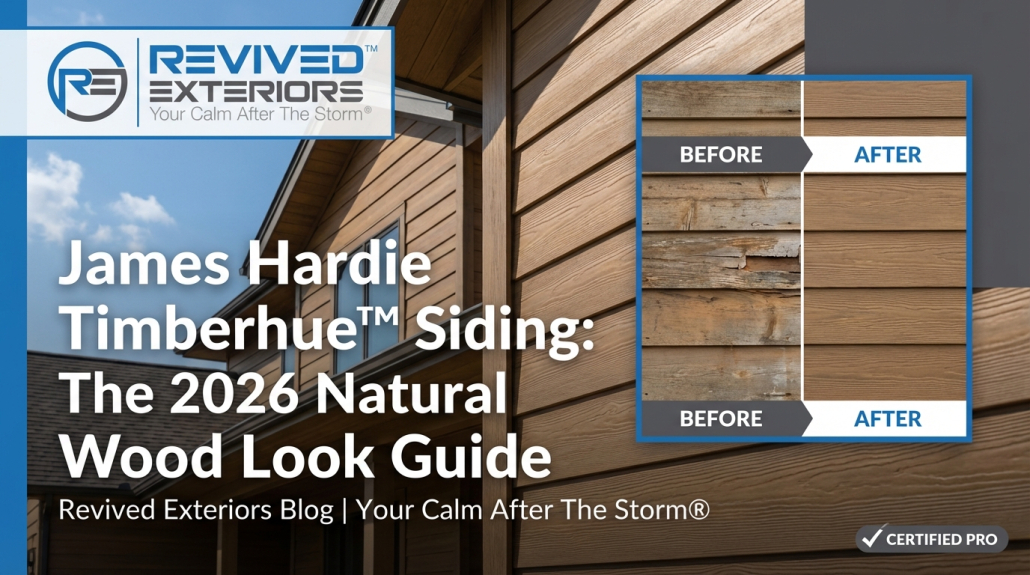
James Hardie Timberhue™ Siding: The Complete Guide to the 2026 Natural Wood Look
James Hardie Timberhue siding is designed for homeowners who want the warmth of real wood without the long-term maintenance, fire risk, or moisture concerns of traditional timber. For decades, homeowners have faced a difficult choice: the timeless, warm aesthetic of natural wood or the rugged durability of fiber cement. In 2026, James Hardie officially closes that gap with the nationwide launch of the Timberhue™ Collection. This next-generation siding line offers a multi-tonal, two-tone finish that mimics the depth and character of real wood while maintaining the fire-rated, pest-resistant properties that have made James Hardie the industry leader in exterior protection.
What is James Hardie Timberhue™ siding? Timberhue™ is a premium fiber cement siding collection launching in Spring 2026, specifically engineered to replicate the appearance of natural wood through advanced two-tone ColorPlus® Technology. Available exclusively in 5-inch and 7-inch reveals, it provides homeowners with a low-maintenance, non-combustible alternative to cedar and oak without sacrificing the “stained wood” aesthetic.
At Revived Exteriors, we understand that Chicago homeowners need products that can withstand brutal Illinois winters and humid summers. The Timberhue™ collection is designed to meet these challenges head-on. In this comprehensive guide, we will break down the technology, the color palette, the costs, and why this product is set to dominate the residential remodeling market in 2026.
1. James Hardie Timberhue™ Siding: The 2026 Natural Wood Revolution
The 2026 launch of Timberhue™ represents more than just a new color palette; it is a fundamental shift in how fiber cement is manufactured. Historically, fiber cement siding was available in solid colors or simple wood-grain textures. While these looked excellent from the curb, they often lacked the organic variation found in real timber. Timberhue™ solves this by utilizing a proprietary application process that layers multiple pigments to create highlights and shadows within the grain.
This collection is strategically focused on the “lap siding” market, launching exclusively in 5-inch and 7-inch reveals. This focus allows for a more controlled manufacturing process, ensuring that the two-tone finish remains consistent across every board. By narrowing the profile options, James Hardie has optimized the visual impact of the grain, making it indistinguishable from stained cedar at a distance of only five feet.
For those who have followed the evolution of the Hardie® Plank, Timberhue™ is the natural successor to the Magnolia Home collection. It takes the “farmhouse” aesthetic and elevates it into a more sophisticated, luxury realm. It is specifically designed for the homeowner who wants their house to stand out in a neighborhood of solid-colored vinyl or traditional painted siding, offering a high-end, organic feel that was previously only achievable with high-maintenance wood products.
2. Why Homeowners Are Choosing James Hardie Timberhue™ Siding Over Natural Wood
Natural wood siding, such as Western Red Cedar, is undeniably beautiful, but it comes with a “maintenance tax.” In regions like the Midwest, wood expands and contracts with the seasons, leading to cracked paint, peeling stains, and eventually, rot. Homeowners are increasingly turning to Timberhue™ because it offers the “stain look” without the 3-to-5-year re-staining cycle required by real timber.
Beyond aesthetics, the move toward Timberhue™ is driven by safety. Real wood is combustible. In an era where fire safety is becoming a priority for insurance companies and building codes, the non-combustible nature of fiber cement is a massive advantage. Timberhue™ does not ignite when exposed to a direct flame, providing a critical layer of protection for your family and your investment.
Pest resistance is another major factor. Wood-peckers, termites, and carpenter bees are naturally attracted to real wood siding. These pests can cause thousands of dollars in damage before they are even noticed. Because Timberhue™ is composed of cement, sand, and cellulose fibers, it offers no nutritional value to pests. It is a “set it and forget it” solution that maintains its integrity for decades.
3. Exploring the 8-Color Palette: From Ash to Ebony Forest
The Timberhue™ palette for 2026 has been curated to reflect modern architectural trends while remaining grounded in classic wood tones. The collection features eight primary colors, each utilizing a two-tone finish to create depth. Among the most anticipated colors are ‘Hickory’ and ‘Weathered Oak’, which offer a warm, medium-brown tone that perfectly replicates the look of freshly stained white oak.
For those seeking a more modern or Scandinavian aesthetic, ‘Ash’ and ‘White Birch’ provide lighter, cooler tones. These colors are particularly effective for contemporary homes with black window frames. At the other end of the spectrum, ‘Ebony Forest’ offers a deep, charred-wood look reminiscent of the Japanese Shou Sugi Ban technique. This color is expected to be a top-seller in the Pacific Northwest and modern urban developments.
The full list of 2026 Timberhue™ colors includes:
- Hickory: A rich, golden brown with deep grain shadows.
- Weathered Oak: A muted, grayish-brown that mimics aged timber.
- Ash: A light, airy neutral with subtle wood grain highlights.
- Ebony Forest: A bold, dark charcoal with a sophisticated matte finish.
- White Birch: A bright, clean wood look for modern farmhouse styles.
- Canyon Ridge: A warm, reddish-brown similar to traditional cedar.
- Silver Fir: A cool-toned gray that works well in coastal environments.
- Deep Walnut: A dark, chocolatey brown for a traditional, stately appearance.
4. Performance Specs: Non-Combustibility and Climate Engineering
One of the most significant advantages of James Hardie products is their HardieZone® System. In the Chicagoland area, we fall into the HZ5® zone. This means Timberhue™ siding installed by Revived Exteriors is specifically engineered to resist freezing temperatures, snow, ice, and the dramatic temperature swings common in the Midwest. The material is formulated to maintain dimensional stability, meaning it won’t shrink or swell like wood or vinyl.
Timberhue™ also carries an ASTM E136 non-combustibility rating. This is a critical distinction from engineered wood products like LP SmartSide, which are still essentially wood-based. Fiber cement will not fuel a fire. This performance spec not only provides peace of mind but can also lead to lower homeowner insurance premiums in many jurisdictions, as the home is considered significantly more fire-resistant.
Additionally, the ColorPlus® Technology used in the Timberhue™ finish is baked onto the boards in a controlled factory environment. This ensures maximum UV resistance. Standard field-applied stains on real wood fade quickly under the sun’s harsh rays. Timberhue™ is designed to resist fading, chipping, and cracking, backed by a 15-year limited finish warranty that covers both paint and labor.
According to independent fire-resistance testing and manufacturer specifications, fiber cement siding products like James Hardie are classified as non-combustible and do not ignite when exposed to flame.
Learn more about James Hardie fiber cement siding performance standards
5. Timberhue™ vs. The Competition: James Hardie vs. LP SmartSide (2026 Update)
In the world of wood-look siding, the primary competition for Timberhue™ is LP SmartSide ExpertFinish. Both products aim to solve the “maintenance problem” of real wood, but they take very different approaches. LP SmartSide is an engineered wood product made of wood strands treated with zinc borate and resins. While it is durable and easy to install, it remains a combustible material.
Material
Fiber Cement (Sand, Cement, Cellulose)
Engineered Wood (Strands & Resin)
Fire Rating
Non-Combustible (ASTM E136)
Combustible
Finish Tech
Multi-tonal ColorPlus® (Two-tone)
Proprietary ExpertFinish (Single or Multi)
Moisture
Won’t rot, swell, or buckle
Resistant, but edges must be sealed
Timberhue™’s main advantage in 2026 is the realism of its two-tone finish. While LP has made strides with its textured finishes, Hardie’s multi-tonal application mimics the way stain soaks into different densities of wood grain. Furthermore, for homeowners in high-density urban areas or wildfire-prone zones, the non-combustibility of Timberhue™ makes it the clear winner for safety and long-term resale value.
6. James Hardie Timberhue™ Siding Cost: What to Expect in 2026
Budgeting for a siding project requires looking at both the material cost and the labor cost. Because Timberhue™ is a premium, specialized product within the James Hardie lineup, it carries a higher price tag than standard HardiePlank® Lap Siding. On average, you can expect the material cost for Timberhue™ to be approximately 15% to 25% higher than the standard ColorPlus® statement collection.
For a standard 2,000-square-foot home in the Illinois market, estimated 2026 pricing for a full Timberhue™ installation ranges from $14.00 to $19.00 per square foot, including labor, materials, and disposal of old siding. This varies based on the complexity of your home’s architecture, the number of stories, and the choice of trim. In comparison, real cedar siding often costs $20-$25 per square foot once you factor in the initial staining and subsequent maintenance costs over the first 10 years.
The ROI (Return on Investment) for Timberhue™ is exceptionally high. According to the “Cost vs. Value” report, fiber cement siding replacement consistently ranks as one of the top home improvement projects for recouping costs at resale. By choosing the Timberhue™ look, you are adding “designer curb appeal” that can significantly increase the valuation of your home compared to standard vinyl or fiber cement options.
7. Best Practices for Installation: Achieving a Random Grain Aesthetic
To make Timberhue™ look like real wood, the installation process must be handled with care. The most common mistake made by inexperienced contractors is “stair-stepping” the grain patterns. Because the two-tone finish is applied in a factory, there are a finite number of grain patterns. A skilled installer, like the team at Revived Exteriors, will shuffle the boards from different pallets to ensure that identical grain patterns do not end up adjacent to one another.
Achieving a truly “random” look requires planning. We recommend a “random staggered joint” pattern, where the vertical seams between boards are spaced at least 32 inches apart. This prevents the eye from catching a repetitive mechanical pattern, which is the quickest way to reveal that a product is not real wood. Furthermore, the use of color-matched caulking and touch-up kits specifically designed for the Timberhue™ palette is essential for a seamless finish.
Proper flashing and clearance are also vital. While fiber cement is moisture-resistant, it should never be installed in direct contact with the ground or roofing materials. Maintaining a 1-inch to 2-inch clearance from horizontal surfaces ensures that water can drain properly, preventing long-term damage to the wall assembly. Following the James Hardie Best Practices (HZ5®) manual is non-negotiable for maintaining the 30-year product warranty.
8. Long-term Care: How to Maintain the Two-Tone Finish
One of the biggest selling points of Timberhue™ is how little you have to do to keep it looking new. Unlike real wood, which needs to be sanded and re-sealed, Timberhue™ only requires basic cleaning. We recommend a low-pressure wash with a garden hose and a soft-bristle brush once a year to remove dust, pollen, and environmental debris. This simple step prevents the buildup of mold or mildew on the surface of the paint.
Avoid the use of high-pressure power washers, as these can damage the specialized two-tone coating. If you encounter stubborn stains, a mild detergent mixed with water is usually sufficient. Because the color is baked-in, you won’t experience the typical “chalking” associated with cheap vinyl siding. The pigments used in the 2026 collection are specifically designed to withstand the high UV exposure of south-facing walls without significant color shift.
If your siding is damaged—for example, by a stray lawnmower rock—it is important to use the James Hardie touch-up kit specifically matched to your Timberhue™ color. Because these colors are multi-tonal, the touch-up kit often includes a base coat and a top-glaze to replicate the two-tone effect. This attention to detail ensures that any repairs remain invisible to the naked eye, preserving your home’s curb appeal for the full life of the product.
9. Final Verdict: Is James Hardie Timberhue™ Worth the Investment in 2026?
If you are a homeowner who loves the warmth of wood but hates the maintenance, Timberhue™ is the definitive answer. The 2026 collection solves the primary aesthetic complaint about fiber cement—that it can look “flat” or “plastic.” With its multi-tonal pigments and deep 5-inch and 7-inch reveals, it is the most realistic wood-alternative on the market today.
While the initial investment is higher than standard siding options, the long-term value is undeniable. You save thousands of dollars in re-staining costs, benefit from lower insurance risks due to non-combustibility, and enjoy a home that looks architecturally superior to anything else on the block. For those in the Chicago suburbs looking to maximize their home’s value and durability, Timberhue™ by James Hardie is a premier choice.
At Revived Exteriors, we have spent 25 years helping homeowners navigate the complexities of exterior remodeling. We are proud to be one of the first installers ready to bring the Timberhue™ revolution to Illinois. Whether you are repairing storm damage or embarking on a complete exterior transformation, this collection offers the perfect blend of beauty and brawn. For homeowners prioritizing durability, curb appeal, and long-term value, James Hardie Timberhue siding stands apart as the most advanced wood-look fiber cement option available in 2026.
Ready to Transform Your Home?
Superior craftsmanship, quality products, and a stress-free customer experience delivered at fair market prices by a family-owned team with over 25 years of experience. Experience the Revived Exteriors difference today.
 Revived Exteriors


 Revived Exteriors

