
DIY vs Professional Roofing in Arlington Heights IL: Safety and Cost Comparison
Choosing between do-it-yourself roofing and hiring a professional roofing contractor is a major decision for homeowners in Arlington Heights, IL. Your roof is your home’s first line of defense against Northern Illinois weather, including heavy snow, hail, strong winds, and repeated freeze-thaw cycles. Understanding the risks, costs, and long-term consequences of each option is essential before selecting roofing materials or starting any work.
If you’re planning a roof repair or replacement, working with an experienced roofing contractor in Arlington Heights, IL helps ensure your roof is installed correctly, meets local code requirements, and qualifies for full manufacturer warranties.
Direct Answer: Is DIY Roofing or Professional Roofing Better in Arlington Heights, IL?
For most homeowners in Arlington Heights, IL, professional roofing installation is the better long-term choice. While small tasks like gutter cleaning or replacing a single damaged shingle may be manageable for experienced DIYers, full roof replacements should be handled by professionals. Local building codes, roofing permit requirements, ice and water shield regulations, and manufacturer warranty rules make professional installation the safest and most cost-effective option over time.
The High Stakes of Roofing in Arlington Heights
Homes in Arlington Heights face unique environmental stress. Rapid temperature swings cause roofing materials to expand and contract, while heavy snow loads and spring thaws increase the risk of leaks and structural damage. A minor installation mistake—such as improperly installed flashing or underlayment—can result in significant water damage during seasonal transitions.
Professional roofers understand how to design roofing systems specifically for Northern Illinois conditions. DIY roofing projects often rely on generalized advice that does not account for local weather patterns or building code requirements.
Weather, Ice Dams, and Freeze-Thaw Cycles
Ice dams are a common issue in Arlington Heights neighborhoods, especially during harsh winters. These occur when warm air escapes from the attic, melts snow on the roof, and refreezes at the eaves. Preventing ice dams requires more than quality shingles—it requires proper attic insulation, balanced ventilation, and correctly installed ice and water shield underlayment.
Professional roofing contractors ensure these systems work together to protect your home, while DIY installations frequently miss these critical details.
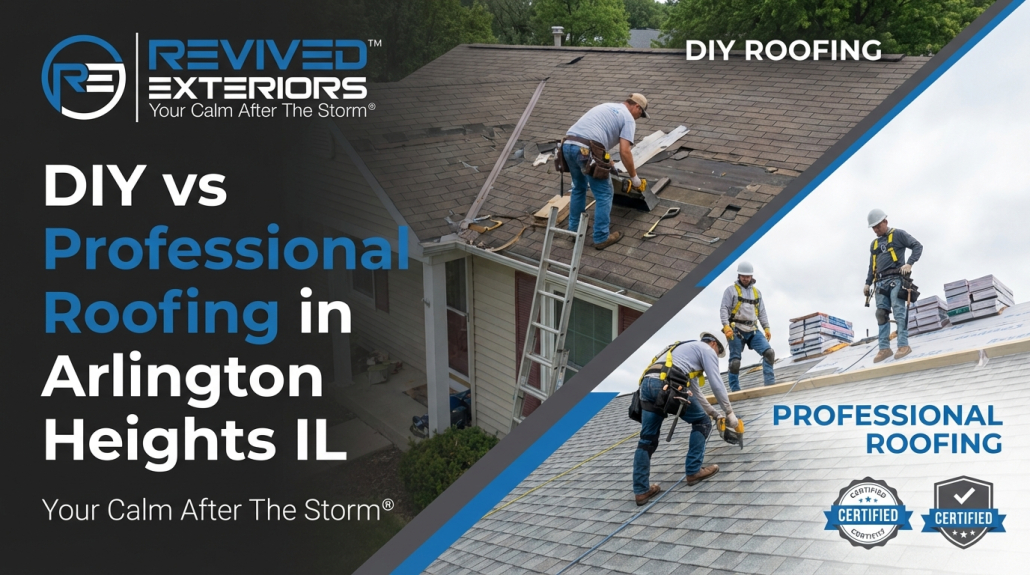
DIY Roofing vs Professional Roofing: What Homeowners Should Know
DIY roofing is often considered a way to save money, but the real costs are frequently underestimated. Roofing requires specialized tools, safety equipment, technical knowledge, and physical endurance. What looks like labor savings can quickly turn into expensive repairs if mistakes are made.
DIY-Friendly Roofing Tasks
- Cleaning gutters and downspouts
- Replacing a single blown-off shingle
- Visual roof inspections from the ground or attic
Even these tasks require proper ladder safety and comfort working at heights. Steep or multi-story roofs increase risk significantly.
Why Professional Roof Replacement Is Superior
A full roof replacement involves removing old materials, inspecting the roof deck, replacing flashing, installing ventilation systems, and following precise fastening patterns required by manufacturers. Professional crews have the equipment and experience to complete this work efficiently—often in one or two days—minimizing your home’s exposure to weather.
DIY projects can stretch over weeks, increasing the risk of water intrusion and material damage.
Roofing Materials Commonly Used in Arlington Heights, IL
Asphalt Shingle Roofing
Architectural asphalt shingles are the most common roofing material in Arlington Heights due to their durability, affordability, and wide range of styles. When installed correctly, they perform well against wind, hail, and temperature fluctuations.
When comparing DIY vs professional roofing in Arlington Heights IL, safety, warranties, and long-term performance are usually the deciding factors.
Improper nailing patterns or underlayment installation can significantly shorten the lifespan of an asphalt roof, making professional installation critical.
Metal Roofing Systems
Metal roofing is growing in popularity across Illinois for its long lifespan, snow-shedding ability, and energy efficiency. Metal roofs can last 40–70 years, but they require specialized installation techniques to manage expansion, contraction, and flashing details.
Metal roofing installation is not considered a DIY-friendly project and should always be handled by experienced professionals.
Composite and Synthetic Roofing Options
Composite roofing materials offer the appearance of slate or cedar without the maintenance concerns. These systems are often impact-rated for hail resistance and engineered for cold climates, but they require manufacturer-certified installation to maintain warranty coverage.
Arlington Heights Roofing Codes, Permits, and Inspections
Roofing projects in Arlington Heights require permits and must comply with local building codes, including amendments to the 2018 International Residential Code (IRC). These codes are designed to ensure roofs can withstand snow loads, wind uplift, and winter conditions.
Roofing Permits and the Roofing Affidavit
Many roofing projects in Arlington Heights require a roofing permit and a Roofing Affidavit. This affidavit confirms that the roof was installed according to code when in-person inspections are not feasible. Licensed roofing contractors are familiar with this process and handle permitting on behalf of homeowners.
DIY homeowners may find navigating permit requirements and documentation challenging, which can delay projects or result in failed inspections.
Ice and Water Shield Requirements
Local code requires ice and water shield underlayment to extend at least 24 inches inside the exterior wall line. This is a critical detail often overlooked in DIY installations but essential for preventing ice dam leaks.
Safety, Liability, and Insurance Considerations
Roofing is one of the most dangerous home improvement projects. Falls from heights are a leading cause of serious injury. Professional roofers use fall-protection systems, safety harnesses, and proper equipment to reduce risk.
In addition, homeowner insurance policies may not cover injuries sustained during DIY roofing. Professional roofing contractors carry liability and workers’ compensation insurance, protecting homeowners from financial risk.
Warranties and Long-Term Value
Most roofing material manufacturers require professional installation to honor warranties. Incorrect fastening, improper ventilation, or installation errors can void coverage immediately.
Professional roofing contractors also provide workmanship warranties, offering additional protection if installation-related issues arise. DIY roofing offers no such safety net.
Final Thoughts: Making the Right Roofing Decision
While DIY roofing may seem appealing for cost savings, the risks, safety concerns, and long-term costs often outweigh the benefits—especially in Arlington Heights’ demanding climate. Professional roofing installation provides code compliance, warranty protection, and peace of mind.
If you’re choosing roofing materials or planning a roof replacement in Arlington Heights, IL, working with a qualified local roofing contractor ensures your roof is built as a complete system designed to protect your home for decades.
View Roofing Contractors in Arlington Heights IL in a full screen map
View Roofing Company near Arlington Heights IL in a full screen map
 Revived Exteriors


 Revived Exteriors
